Emergency Kit for People on Anticoagulants (Blood Thinners): Complete Guide & Must-Have Checklist
Introduction
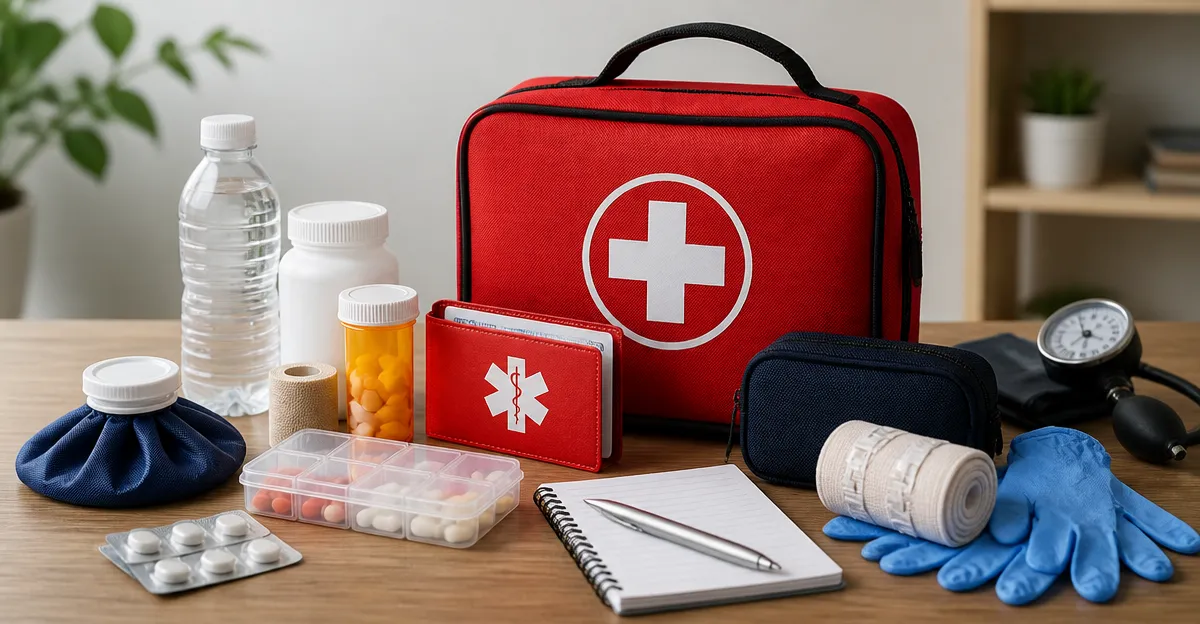
Individuals who take anticoagulant medication face a heightened risk of prolonged bleeding after even minor injuries. This guide explains why a specialized emergency kit is essential, outlines the core components that mitigate bleeding risks, and recommends proven products that meet the highest safety standards. Readers will learn how to evaluate each item, assemble a compact kit, and maintain it for long‑term reliability.
By the end of this article, one will be able to select the right tools, understand proper usage, and feel confident that the kit will perform under stress.
Background and Context
Anticoagulants, such as warfarin, apixaban, or dabigatran, interfere with the blood’s clotting cascade. While these drugs prevent dangerous clots, they also reduce the body’s natural ability to stop bleeding. Consequently, a small cut can become a serious emergency if not treated promptly.
Medical literature recommends that patients on blood thinners keep a dedicated first‑aid kit that includes hemostatic agents, a reliable tourniquet, and basic wound‑care supplies. The kit should be portable, durable, and easy to use without professional assistance.
Regulatory bodies such as the U.S. Army Institute of Surgical Research have validated certain tourniquets for rapid hemorrhage control. Similarly, hemostatic powders and gauze have been adopted by Tactical Combat Casualty Care (TCCC) protocols for their ability to accelerate clot formation even in anticoagulated patients.
Core Components of an Anticoagulant‑Friendly Emergency Kit
1. Hemostatic Tourniquet
A high‑quality tourniquet is the cornerstone for controlling severe limb bleeding. The North American Rescue C‑A‑T Tourniquet is a generation‑7 design that exceeds the ANSI/ISEA Z308.1‑2021 standard. It provides one‑handed application, a durable windlass, and a patented free‑moving internal band that delivers true circumferential pressure.
- Proven 100% effectiveness in upper and lower extremities (U.S. Army Institute of Surgical Research).
- Official tourniquet of the U.S. Army since 2005.
- Red tip tab for rapid visual identification under stress.
- Price: $34.75, Rating: 4.9/5 (6,290 reviews).
2. Hemostatic Powder
For bleeding that cannot be stopped with direct pressure alone, a clotting powder offers rapid coagulation. BleedStop Blood Clotting Powder is FDA‑registered, non‑stinging, and safe for patients on blood thinners. The powder adheres to the wound surface and accelerates the natural clotting cascade without the need for removal before bandaging.
- Stops bleeding on contact for moderate to severe wounds and nosebleeds.
- Effective for users on anticoagulant therapy.
- Compact 15 g pouches (4 per pack) for easy carriage.
- Price: $14.99, Rating: 4.8/5 (12,804 reviews).
3. Hemostatic Gauze
When a wound is deep or irregular, a gauze impregnated with kaolin provides a flexible, non‑stick dressing that speeds clot formation. The QuikClot Kaolin Clotting Gauze is combat‑proven, TCCC‑approved, and works well on patients taking blood thinners.
- Stops bleeding up to five times faster than standard gauze.
- Non‑adherent, conforms to wound contours.
- Lightweight, fits in backpacks, glove boxes, or car kits.
- Price: $19.49, Rating: 4.7/5 (17,005 reviews).
4. Comprehensive First‑Aid Supplies
Beyond hemorrhage control, a basic first‑aid kit supplies cleaning agents, bandages, and pain relief. Two excellent options are:
- Band‑Aid Portable First Aid Kit – 160 pieces including adhesive bandages, gauze pads, antiseptic wipes, antibiotic cream, and a non‑medicated ice pack. Price: $18.36, Rating: 4.8/5 (14,562 reviews).
- Be Smart Get Prepared First Aid Kit – 110 pieces with adhesive bandages, butterfly closures, splints, and an instant cold compress. Compact case measures 7.5 × 2.5 × 6.8 in. Price: $8.39, Rating: 4.7/5 (40,216 reviews).
Both kits are FSA/HSA eligible, feature organized compartments, and can be refilled with additional supplies as needed.
Comparison and Selection Guide
| Component | Product | Key Strengths | Typical Use Cases | Price |
|---|---|---|---|---|
| Tourniquet | North American Rescue C‑A‑T | One‑handed application, military‑grade, ANSI‑compliant | Severe limb hemorrhage, outdoor accidents, combat‑style scenarios | $34.75 |
| Clotting Powder | BleedStop Blood Clotting Powder | Effective on anticoagulated patients, non‑stinging, compact | Minor to moderate cuts, nosebleeds, surgical site bleeding | $14.99 |
| Hemostatic Gauze | QuikClot Kaolin Gauze | Kaolin‑accelerated clotting, flexible, TCCC‑approved | Deep lacerations, battlefield or wilderness trauma | $19.49 |
| Full‑Kit (Large) | Band‑Aid Portable First Aid Kit | 160 items, includes pain relievers and ice pack | Family car, travel, home backup | $18.36 |
| Full‑Kit (Compact) | Be Smart Get Prepared First Aid Kit | 110 items, impact‑resistant case, FDA‑registered | Office desk, college dorm, compact car | $8.39 |
When choosing a kit, consider the environment (urban vs. wilderness), the number of users, and the typical severity of injuries encountered. For anticoagulant patients, prioritize hemostatic agents (tourniquet, powder, gauze) before adding general supplies.
Best Practices & Tips for Anticoagulant Users
- Carry the kit at all times. Store it in a belt‑mounted holder, backpack, or vehicle glove box where it is readily accessible.
- Practice application. Use a training tourniquet to rehearse one‑handed placement and windlass tightening. Repetition builds muscle memory for stressful situations.
- Inspect regularly. Verify that the tourniquet windlass moves freely, the powder is sealed, and gauze remains sterile. Replace any expired items.
- Apply pressure first. Direct pressure remains the first line of defense. If bleeding persists after two minutes, add clotting powder and then cover with QuikClot gauze.
- Mark application time. The C‑A‑T includes a gray time strap; record the minute of tourniquet placement to inform medical personnel.
- Know medication interactions. Patients on warfarin or DOACs may require longer tourniquet times; always seek professional care as soon as possible.
- Maintain a backup. Carry a second tourniquet or additional gauze in case the first device loosens or a second victim requires care.
Frequently Asked Questions
Can a tourniquet be used on a finger or toe?
Yes, the C‑A‑T can be applied to small extremities, but the windlass should be tightened only until bleeding stops to avoid unnecessary tissue damage.
Is BleedStop safe for children?
BleedStop is non‑stinging and FDA‑registered, making it safe for all ages, including children, when used as directed.
How long can a tourniquet remain in place?
Professional guidelines suggest a maximum of two hours for limb tourniquets. For anticoagulated patients, aim for the shortest effective time and seek emergency care immediately.
Do I need both clotting powder and hemostatic gauze?
While either product can control bleeding, using powder first to initiate clotting and then covering with gauze provides a double barrier, especially useful for deep or irregular wounds.
What should I do if the powder does not stop the bleed?
Apply additional layers of powder, maintain firm pressure, and then place QuikClot gauze. If bleeding persists after five minutes, call emergency services.
Can I reuse the tourniquet after an emergency?
Yes, after proper cleaning and inspection, the C‑A‑T can be reused. However, keep a spare for future incidents.
Conclusion
People on anticoagulants must adopt a proactive approach to hemorrhage control. By assembling a kit that includes a military‑grade tourniquet, clotting powder, kaolin‑impregnated gauze, and a well‑stocked first‑aid set, one can dramatically reduce the risk of life‑threatening blood loss. Regular practice, inspection, and awareness of medication effects ensure the kit remains effective when needed.
Investing in these proven products provides not only physical safety but also peace of mind for patients, families, and caregivers.
Products Featured in This Guide
North American Rescue C‑A‑T Tourniquet
Price: $34.75 | Rating: 4.9/5 (6,290 reviews)
Featured for its proven 100% effectiveness, one‑handed application, and compliance with the latest ANSI/ISEA standards, making it ideal for rapid limb hemorrhage control.
Band‑Aid Portable First Aid Kit
Price: $18.36 | Rating: 4.8/5 (14,562 reviews)
Provides a comprehensive 160‑piece assortment of bandages, antiseptic wipes, pain relievers, and an ice pack, suitable for home, travel, and vehicle storage.
BleedStop Blood Clotting Powder
Price: $14.99 | Rating: 4.8/5 (12,804 reviews)
Non‑stinging, FDA‑registered powder that stops bleeding on contact, effective for users on blood thinners and ideal for compact emergency kits.
Be Smart Get Prepared First Aid Kit
Price: $8.39 | Rating: 4.7/5 (40,216 reviews)
Compact 110‑piece kit meeting FDA medical device standards, perfect for car glove boxes, office desks, or college dorms.
QuikClot Kaolin Clotting Gauze
Price: $19.49 | Rating: 4.7/5 (17,005 reviews)
Kaolin‑impregnated gauze that accelerates clotting up to five times faster, approved for combat and wilderness trauma scenarios.