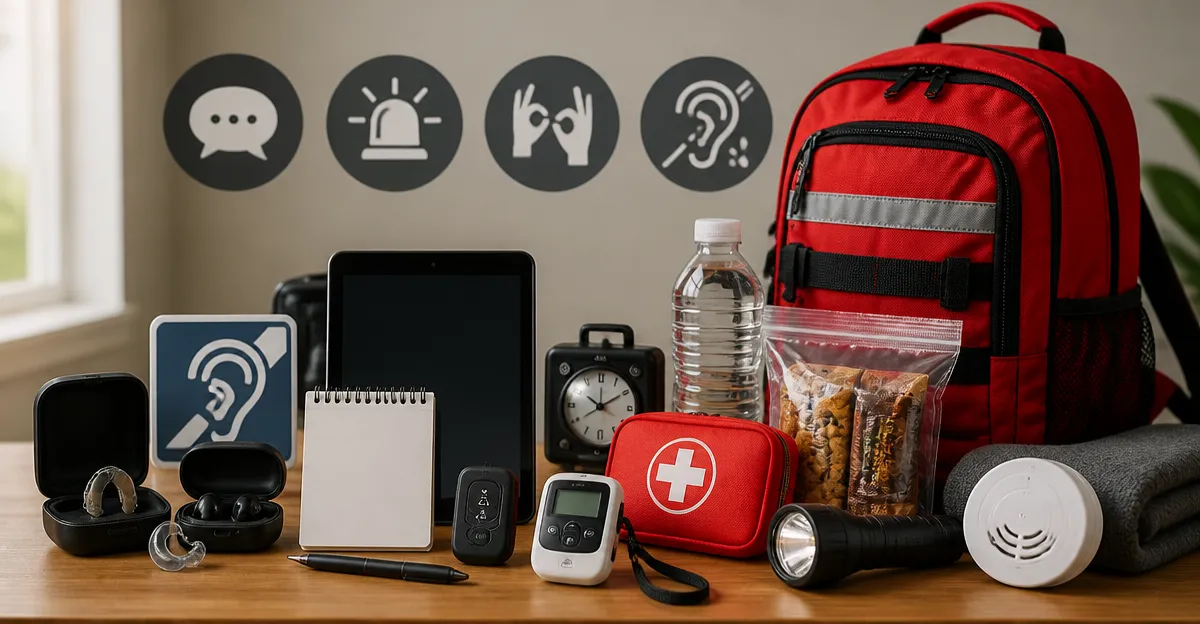
Emergency Kit for Deaf and Hard of Hearing: The Complete Guide & Checklist for Essential Items, Communication Tools, and Safety Tips
Introduction
Emergencies test the preparedness of every household, but deaf and hard‑of‑hearing individuals face unique challenges that demand specialized planning. This guide explains the essential components of an inclusive emergency kit, outlines communication tools that function without sound, and provides safety strategies that empower independence. Readers will learn how to select and organize supplies, evaluate products such as the GEVOKE 500-Piece First Aid Kit, and apply best practices that reduce risk during crises.
Background and Context
Deafness and hearing loss affect millions worldwide, and emergency response systems often rely on auditory alerts, spoken instructions, and verbal coordination. Without visual or tactile alternatives, individuals may miss critical warnings, evacuation orders, or medical assistance cues. Understanding the legal framework, such as the Americans with Disabilities Act, highlights the responsibility of communities to provide accessible emergency information. Moreover, technology advances have introduced vibrating alerts, visual sirens, and text‑based communication devices that bridge the gap between traditional emergency protocols and the needs of the deaf community.
Essential First‑Aid Supplies
A robust first‑aid component forms the cornerstone of any emergency kit. The supplies must address common injuries while remaining organized for rapid retrieval. The GEVOKE 500-Piece First Aid Kit offers a comprehensive inventory that includes bandages, antiseptic wipes, gauze pads, and emergency trauma tools. Its intelligent compartmentalized design features labeled sections, enabling users to locate items at a glance, which is especially valuable when visual cues replace auditory instructions.
- Durable 1680D polyester fabric provides water resistance and tear‑proof protection.
- Reflective strips enhance visibility in low‑light conditions, supporting safety during night‑time evacuations.
- Double‑zippered compartments allow refillability, ensuring the kit can be restocked after use.
- MOLLE system compatibility permits attachment to backpacks, vehicle mounts, or tactical vests.
When assembling a personal kit, consider supplementing the GEVOKE kit with medication specific to the user, such as prescribed epinephrine auto‑injectors, and a copy of medical history in a waterproof pouch.
Communication Tools for Deaf and Hard of Hearing
Effective communication during emergencies relies on devices that transmit information without sound. Key categories include visual alert systems, text‑based messaging platforms, and tactile notification devices.
- Visual Alert Systems: Battery‑powered LED sirens can be placed in living areas to flash in sync with fire alarms or severe weather warnings. Models often feature multiple flash patterns to distinguish between fire, carbon monoxide, or intrusion alerts.
- Text‑Based Messaging: Smartphones equipped with emergency alert apps deliver push notifications in text form. Ensure the device is set to receive government alerts and that the battery is maintained above 50 percent.
- Tactile Notification Devices: Wearable vibration pagers attach to a wristband or belt, vibrating when a connected alarm triggers. Some devices integrate Bluetooth connectivity to relay alerts from smart home systems.
When selecting a device, verify that it complies with the FCC’s accessibility standards and that it offers a clear, distinguishable vibration pattern for each type of emergency.
Safety and Signaling Devices
In situations where rescue teams must locate an individual, visual and tactile signaling tools become essential. The following items complement the first‑aid kit and communication devices:
- High‑visibility safety vests with reflective tape for daytime and nighttime visibility.
- Portable strobe lights powered by rechargeable batteries, capable of emitting a bright, attention‑grabbing flash.
- Whistle‑alternatives such as personal alarm beepers that emit a loud, high‑frequency tone; although primarily auditory, they can be paired with a visual indicator for dual‑modal alerts.
- Emergency blankets with built‑in reflective surfaces, useful for retaining body heat and increasing visibility.
Integrating these items into a single, easily transportable bag reduces the likelihood of forgetting critical tools during an evacuation.
Organizing Your Inclusive Emergency Kit
Organization strategies should prioritize speed, clarity, and durability. Begin by selecting a sturdy container, such as a waterproof backpack or a hard‑sided case with a latch that can be opened with one hand. Inside the container, allocate separate compartments for medical supplies, communication devices, and signaling tools. Use color‑coded zip‑tie loops or Velcro tags to differentiate sections, and attach a laminated checklist to the interior lid for quick verification.
For deaf users, consider adding a large‑print index card that lists the location of each item, using bold headings and icons. Place the index card in a pocket that remains visible when the bag is opened, ensuring that visual reference is immediate.
Comparison and Selection Guide
Choosing the right first‑aid kit involves evaluating capacity, durability, and refill options. The GEVOKE 500‑Piece First Aid Kit stands out for its large inventory and modular design. Compared with typical 100‑piece kits, it provides:
| Feature | GEVOKE 500‑Piece Kit | Standard 100‑Piece Kit |
|---|---|---|
| Number of Items | 500 | 100 |
| Material | 1680D polyester, waterproof | Polyester, water‑resistant |
| Compartment Labels | Yes, color‑coded | Limited |
| Refillability | Double zippered, easy to restock | Single compartment |
| MOLLE Compatibility | Yes | No |
When evaluating other kits, ask whether they offer similar compartmentalization, waterproofing, and the ability to attach to backpacks or vehicle mounts. A kit lacking these features may be less suitable for outdoor adventures or vehicle emergencies where space and durability are paramount.
Best Practices & Tips
- Conduct quarterly drills that simulate fire, severe weather, and medical emergencies. During each drill, practice locating the first‑aid kit, activating visual alerts, and using text‑based messaging to call for help.
- Store the emergency kit in a location known to all household members, preferably near an exit route but out of direct sunlight to preserve supplies.
- Maintain a digital copy of the kit inventory on a smartphone, synchronized with a cloud service. This ensures that replacement items can be ordered promptly after use.
- Teach family members the meaning of each visual alert pattern. For example, a slow flash may indicate a fire alarm, while a rapid flash could signal a carbon monoxide detector.
- Regularly test battery‑powered devices, replacing batteries at least once a year, even if the device still appears functional.
Frequently Asked Questions
- 1. How often should I replace the supplies in my first‑aid kit?
- Medical supplies such as bandages, antiseptic wipes, and over‑the‑counter medications should be inspected every six months and replaced when they approach their expiration dates.
- 2. Can visual alert systems work with existing smoke detectors?
- Yes, many visual alarms are designed to connect to standard smoke detector wiring or to wireless alarm hubs, providing simultaneous audible and visual warnings.
- 3. What is the best way to ensure my smartphone receives emergency alerts?
- Enable government alerts in the phone’s settings, keep the device on a charger during power outages using a portable power bank, and install a reliable emergency alert app that supports text notifications.
- 4. Are there any legal requirements for accessible emergency kits in public venues?
- Under the Americans with Disabilities Act, public venues must provide auxiliary aids and services, which include visual alarms and captioned emergency information, to ensure equal access for deaf and hard‑of‑hearing patrons.
- 5. How can I train a child who is deaf to use the emergency kit?
- Use simple, illustrated instructions, role‑play scenarios, and practice locating the kit together. Reinforce learning with visual cue cards that match each emergency situation.
- 6. What should I do if I lose power during an emergency?
- Rely on battery‑powered visual alerts, hand‑crank flashlights, and pre‑programmed text messages that can be sent without cellular service using satellite communication devices.
- 7. Is it necessary to have a separate kit for the vehicle?
- Having a compact version of the main kit in the vehicle is advisable. Choose a smaller, MOLLE‑compatible pouch that can be attached to the seat belt or trunk.
Conclusion
Preparing an emergency kit that addresses the specific needs of deaf and hard‑of‑hearing individuals requires thoughtful selection of visual, tactile, and text‑based tools. By incorporating a comprehensive first‑aid supply such as the GEVOKE 500‑Piece First Aid Kit, integrating reliable visual alerts, and organizing items for rapid access, households can achieve a higher level of safety and confidence during crises. Regular practice, maintenance, and education ensure that the kit remains effective, empowering users to respond swiftly and independently.
Products Featured in This Guide
GEVOKE 500-Piece First Aid Kit
Price: Not listed
Rating: Not listed
Why it is featured: Provides a large, organized, and refillable supply of medical essentials with waterproof construction and reflective strips, making it ideal for deaf and hard‑of‑hearing users who rely on visual cues during emergencies.