Introduction
This guide explores the relationship between emergency lighting color temperature and human circadian rhythms. Readers will learn why light quality matters during power outages, how different spectra influence sleep, and which products provide the most sleep‑friendly illumination. By the end of the article, one will be equipped to select emergency lights that protect health while ensuring safety.
Background and Context
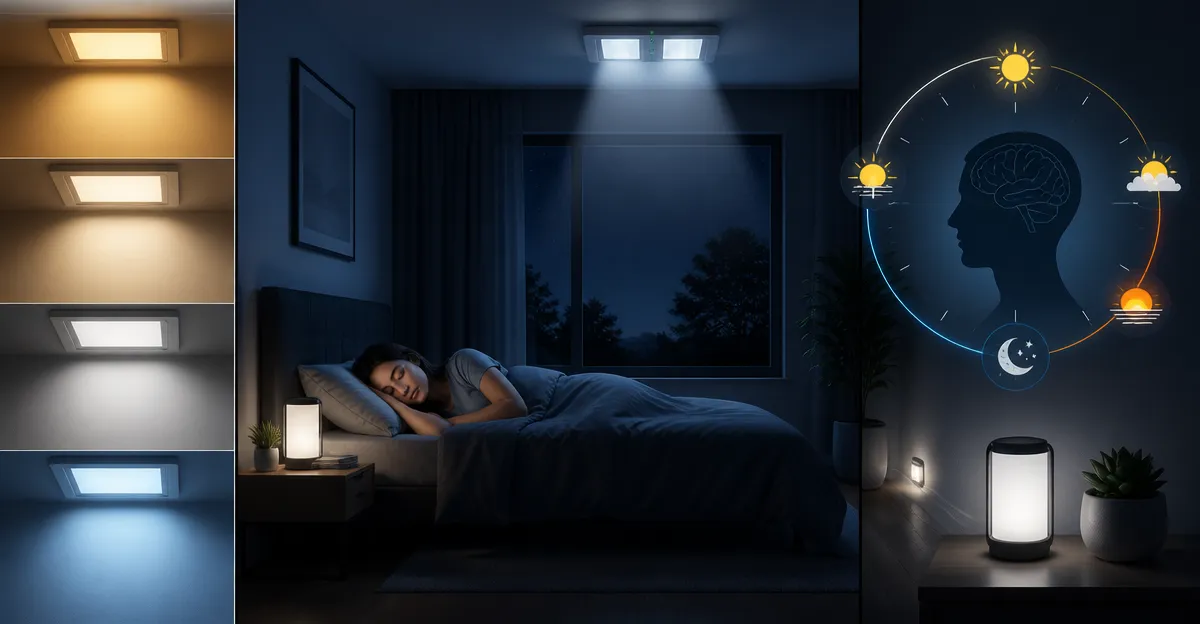
The human circadian system relies on light cues to regulate hormone release, body temperature, and alertness. Blue‑rich light (approximately 5000‑6500K) suppresses melatonin, signaling the brain that it is daytime. Conversely, warmer light (2700‑3000K) has a milder impact, allowing the body to transition toward sleep. Emergency lighting traditionally prioritizes brightness over spectral quality, which can unintentionally disrupt sleep patterns during night‑time outages.
Understanding the science behind color temperature enables homeowners, facility managers, and designers to make informed choices. The goal is to balance safety—providing sufficient illumination for navigation—with health—minimizing circadian disruption.
Key Concepts and Strategies
Color Temperature Explained
Color temperature is measured in kelvins (K) and describes the hue of a light source. Lower values (2700‑3000K) appear warm and amber, while higher values (5000‑6500K) appear cool and bluish. The "daylight" range (5000‑6500K) mimics natural sunlight, which is ideal for alertness but not for nighttime use.
Circadian Impact of Emergency Lighting
When an emergency light activates in the middle of the night, a high‑kelvin output can delay melatonin production, extending the time required to fall asleep. Repeated exposure may accumulate sleep debt, especially for individuals sensitive to light. Selecting lights with adjustable color temperature or lower kelvin ratings mitigates this risk.
Strategies for Sleep‑Friendly Emergency Lighting
- Prefer lights that emit 2700‑3000K during nighttime operation.
- Choose fixtures with multiple brightness levels to reduce glare.
- Utilize battery‑powered bulbs that remain off until a power loss occurs, preventing unnecessary exposure.
- Consider plug‑in auto‑on models that can be positioned away from sleeping areas.
Product Recommendations
Below are curated products that align with circadian‑friendly principles while delivering reliable illumination during outages.
DEBAOBULB Rechargeable Emergency Bulbs
The DEBAOBULB Rechargeable Emergency Bulbs replace standard E26/E27 bulbs and provide up to 5 hours of light when the mains fail. They emit a 6000K daylight spectrum, which is bright for safety but may be too blue for night‑time use. However, the product includes three dimming levels: 2.5W (450 lm), 1.5W (220 lm), and 1W (110 lm). Selecting the lowest setting reduces blue exposure while still offering enough illumination to navigate safely.
- Battery capacity: 1200 mAh, holds charge for up to 60 days.
- Rated life: 25,000 hours.
- Price: $33.98, rating: 4.6/5 (3,823 reviews).
Energizer Rechargeable LED Flashlights
The Energizer Rechargeable LED Flashlights are plug‑in auto‑on units that stay charged in any standard outlet. They emit a neutral white light designed for indoor emergency use. While the exact kelvin rating is not disclosed, the product’s focus on “up to 4x brighter than standard LED” suggests a balanced spectrum suitable for short‑term illumination without excessive blue light.
- Three‑pack, each runs approximately 3 hours on battery.
- Impact‑resistant up to 1 meter.
- Price: $22.28, rating: 4.7/5 (18,958 reviews).
Lithonia LED Emergency Light
The Lithonia LED Emergency Light offers dual heads with adjustable color temperature ranging from 5000K to 9000K. Although the higher end exceeds sleep‑friendly limits, the adjustable heads allow users to set the lower 5000K range or use a diffuser to soften the light. Its 90‑minute backup and automatic activation make it ideal for commercial corridors where safety outweighs sleep concerns.
- Power input: 120/277 V.
- Battery: rechargeable nickel‑cadmium.
- Price: $21.50, rating: 4.6/5 (1,241 reviews).
Sunco LED Emergency Lights
The Sunco LED Emergency Lights provide 2 W LEDs with a selectable 6500K color temperature. While the default is bright cool white, the product’s “simple install” design includes a dimming switch that can lower output, reducing blue exposure. For residential use, pairing the fixture with a warm‑white diffuser is recommended.
- Package: 6‑pack, each with 90‑minute battery backup.
- FCC certified, UL listed.
- Price: $89.99.
Amazon Basics LED Emergency Light
The Amazon Basics LED Emergency Light features two adjustable “bug‑eye” heads with a neutral white output. The product does not specify kelvin, but the dual‑head design allows targeted illumination, limiting overall light spill. Its nickel‑cadmium battery provides a 90‑minute runtime, and the UL‑94‑5VA flame rating ensures safety.
- Price: $66.64, rating: 4.6/5 (134 reviews).
- Mounting options: wall, ceiling, end.
Comparison and Selection Guide
| Feature | DEBAOBULB Bulbs | Energizer Flashlights | Lithonia Light | Sunco Lights | Amazon Basics Light |
|---|---|---|---|---|---|
| Color Temperature | 6000K (adjustable via dimming) | Neutral white (unspecified) | 5000‑9000K adjustable | 6500K (fixed) | Neutral white (unspecified) |
| Battery Life (runtime) | 2‑6 hrs (depending on level) | ~3 hrs | 90 mins | 90 mins | 90 mins |
| Installation | Standard bulb socket | Plug‑in wall outlet | Wall‑mount J‑box | Wall‑mount | Wall/ceiling/end mount |
| Price (USD) | 33.98 | 22.28 | 21.50 | 89.99 | 66.64 |
| Rating | 4.6 | 4.7 | 4.6 | N/A | 4.6 |
When prioritizing sleep health, select products that allow lower brightness or warmer spectra. For households where safety and quick activation are paramount, the Energizer Rechargeable LED Flashlights and Lithonia LED Emergency Light provide reliable auto‑on performance. For budget‑conscious users seeking easy retrofitting, the DEBAOBULB Rechargeable Emergency Bulbs offer dimmable options that can be set to the lowest level during night‑time outages.
Best Practices & Tips
- Install lights away from primary sleeping areas whenever possible.
- Use the lowest brightness setting that still ensures safe navigation.
- Consider adding a warm‑white diffuser or lamp shade to high‑kelvin fixtures.
- Test all emergency lights monthly to verify battery health and auto‑on functionality.
- Combine battery‑powered bulbs with plug‑in auto‑on flashlights for layered protection.
- Maintain a consistent bedtime routine; avoid looking directly at emergency lights for more than a few seconds.
FAQ
What is the ideal color temperature for emergency lighting at night?
The recommended range is 2700‑3000K, which mimics warm incandescent light and minimizes melatonin suppression.
Do rechargeable emergency bulbs need to be replaced often?
Most rechargeable bulbs, such as the DEBAOBULB model, are rated for 25,000 hours of use, equivalent to several years of normal operation.
Can I use a standard LED bulb as an emergency light?
Standard LEDs lack built‑in batteries and will not illuminate during a power outage unless paired with a separate backup power source.
Are plug‑in auto‑on flashlights safe for continuous use?
Yes. Devices like the Energizer Rechargeable LED Flashlights are designed to remain plugged in without overheating, as confirmed by user reviews.
How often should I test my emergency lighting system?
Perform a functional test at least once every three months. Verify that batteries hold charge and that auto‑on mechanisms activate promptly.
Conclusion
Choosing emergency lighting that respects circadian biology enhances both safety and sleep quality. By understanding color temperature, leveraging dimmable or adjustable‑temperature fixtures, and following best‑practice installation guidelines, readers can create a resilient lighting strategy that protects health during power outages.
Products Featured in This Guide
DEBAOBULB Rechargeable Emergency Bulbs
Price: $33.98 | Rating: 4.6/5 (3,823 reviews)
Featured for its dimmable settings that allow users to lower blue light exposure while still providing up to 5 hours of illumination during outages.
Energizer Rechargeable LED Flashlights
Price: $22.28 | Rating: 4.7/5 (18,958 reviews)
Chosen for its plug‑in auto‑on design, reliable battery, and neutral white output that balances safety with reduced circadian impact.
Lithonia LED Emergency Light
Price: $21.50 | Rating: 4.6/5 (1,241 reviews)
Included for its adjustable dual‑head design, allowing users to set a lower color temperature and target illumination where needed.
Sunco LED Emergency Lights
Price: $89.99 | Rating: Not listed
Highlighted for its high‑efficiency LEDs and simple wall‑mount installation, suitable for commercial spaces where brightness is essential.
Amazon Basics LED Emergency Light
Price: $66.64 | Rating: 4.6/5 (134 reviews)
Featured for its versatile mounting options and UL‑certified safety, offering a cost‑effective solution for residential and light‑commercial use.
Frequently Asked Questions
What is color temperature in emergency lighting?
Color temperature measures the hue of light, expressed in Kelvin, indicating whether the light appears cool (blue‑rich) or warm (yellow‑rich).
How does blue‑rich emergency light affect sleep?
Blue‑rich light (≈5000‑6500K) suppresses melatonin, signaling the brain it’s daytime and making it harder to fall asleep during night‑time outages.
Which color temperature is best for night‑time emergencies?
Warm light around 2700‑3000K is most sleep‑friendly, providing adequate visibility while minimizing circadian disruption.
Can I replace existing emergency lights with sleep‑friendly options?
Yes, many modern emergency fixtures offer adjustable or low‑temperature LEDs that meet safety standards and support healthier sleep cycles.
Does lower color temperature compromise safety?
No, warm‑temperature LEDs still deliver sufficient illumination for safe navigation while reducing the impact on circadian rhythms.