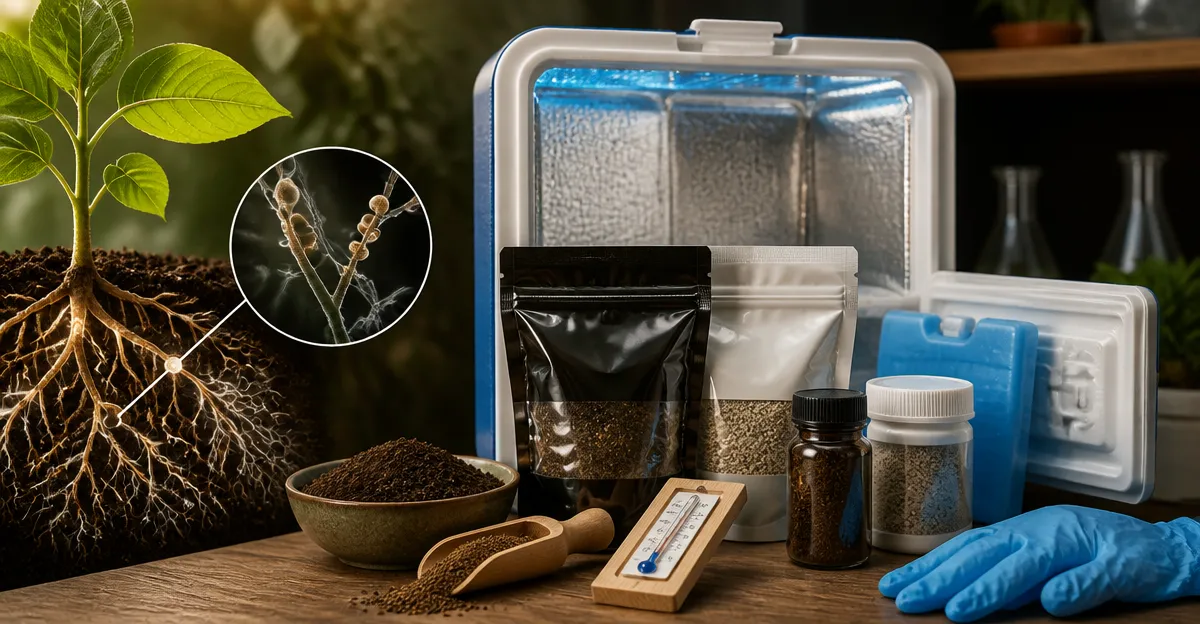
How to Store Mycorrhizal Inoculant Long-Term: The Ultimate Guide to Preservation, Shelf Life & Best Practices
Introduction
Mycorrhizal inoculants are living microorganisms that form a symbiotic relationship with plant roots, enhancing nutrient and water uptake. Proper storage is essential to maintain their viability, especially for gardeners who purchase in bulk or wish to keep a supply for multiple seasons. This guide explains the scientific basis of mycorrhizal preservation, outlines proven storage strategies, and recommends products that simplify long‑term maintenance. Readers will learn how temperature, humidity, packaging, and handling affect inoculant life, and will receive a clear comparison of the most popular options on the market.
Background and Context
Mycorrhizal fungi belong to a diverse group of soil microbes that colonize plant roots, extending the root’s absorptive surface through a network of hyphae. The two most common types are arbuscular mycorrhizae (AM) and ectomycorrhizae; the products featured in this guide primarily contain AM fungi because they are effective for a wide range of vegetables, herbs, and ornamental plants. When stored incorrectly, fungal spores lose viability, reducing the inoculant’s ability to colonize roots and deliver benefits. Viability is typically measured by the percentage of spores that germinate under laboratory conditions, and reputable manufacturers provide this data through third‑party testing.
Key factors influencing shelf life include:
- Temperature – most spores remain stable between 4 °C and 25 °C; extreme heat accelerates degradation.
- Moisture – excess humidity can trigger premature germination, while desiccation can damage spore membranes.
- Light exposure – ultraviolet radiation degrades cellular components, so dark storage is preferred.
- Packaging – airtight, moisture‑resistant containers protect against environmental fluctuations.
Understanding these variables allows gardeners to create a storage environment that mimics the natural dormancy conditions of mycorrhizal spores.
Storage Strategies for Long-Term Preservation
Below are the most effective methods for keeping mycorrhizal inoculants viable for years.
1. Cool, Dark, and Dry Storage
Place the inoculant in a refrigerator (4 °C–8 °C) or a cool basement where temperature remains stable. Use opaque containers or wrap the original bag in a foil sleeve to block light. Add a desiccant packet (silica gel) to absorb residual moisture, but ensure the packet does not come into direct contact with the product.
2. Vacuum‑Sealed Packaging
Vacuum sealing removes air, which slows oxidative processes and reduces moisture ingress. Many gardeners repack bulk granules into Mylar bags with a heat‑seal, then store the sealed bag in a refrigerator. This method is especially useful for products with high spore counts, such as Xtreme Gardening Mykos Mycorrhizae, which contains a robust consortium of beneficial fungi.
3. Freezing for Extended Periods
Freezing at –20 °C can preserve spores for up to five years, provided the inoculant is dry and sealed. Rapid freezing without moisture prevents ice crystal formation that could rupture spore walls. Use freezer‑safe containers and label each package with the date of freezing.
4. Use of Protective Carriers
Some manufacturers formulate inoculants with protective carriers such as peat, vermiculite, or bio‑encapsulated polymers. These carriers buffer temperature swings and retain a modest amount of moisture that mimics natural soil conditions. The Trifecta Myco Supreme Root Stimulator utilizes a bio‑encapsulated spore technology that enhances stability during storage.
5. Rotate Stock and Record Dates
Implement a first‑in, first‑out (FIFO) system. Write the purchase and opening dates on each package, and prioritize older stock for use. Regularly inspect for clumping, discoloration, or off‑odors, which may indicate loss of viability.
Product Recommendations Integrated with Storage Practices
While storage techniques are universal, certain products are designed to simplify preservation.
- Xtreme Gardening Mykos Mycorrhizae – Granular formula, OMRI listed, 2.2 lb package priced at $27.49 with a 4.8‑star rating from 8,356 reviews. The granular texture is ideal for vacuum sealing and refrigerator storage.
- DYNOMYCO Mycorrhizal Inoculant 50g – Compact 50 g pouch priced at $11.95, rated 4.6 stars. Its small size makes it convenient for freezer storage and minimizes waste.
- DYNOMYCO Mycorrhizal Inoculant 100g – Larger 100 g version at $18.95, also 4.6 stars. Suitable for gardeners who need a higher dose but still want to vacuum seal for long‑term use.
- Trifecta Myco Supreme Root Stimulator – Ultra‑concentrated 2 oz powder priced at $19.95, 4.6‑star rating. The high propagule density (5,000 propagules per gram) reduces the amount needed per application, decreasing storage volume.
- Big Foot Mycorrhizae – 4 oz package priced at $12.98, rating 4.7 stars. Contains 7,500 spores, and its larger granules are less prone to clumping, making them easy to store in airtight jars.
Comparison and Selection Guide
| Product | Size & Price | Propagules / g | Best Storage Method | Key Advantage |
|---|---|---|---|---|
| Xtreme Gardening Mykos Mycorrhizae | 2.2 lb – $27.49 | Not disclosed, but high efficacy shown in user reviews | Vacuum‑sealed and refrigerated | Broad plant compatibility and OMRI listed |
| DYNOMYCO Mycorrhizal Inoculant 50g | 50 g – $11.95 | 900 propagules per gram | Freezer‑safe sealed pouch | High propagule density for small applications |
| DYNOMYCO Mycorrhizal Inoculant 100g | 100 g – $18.95 | 900 propagules per gram | Vacuum‑sealed, refrigerator or freezer | Cost‑effective bulk option |
| Trifecta Myco Supreme Root Stimulator | 2 oz – $19.95 | 5,000 propagules per gram | Cool, dark cabinet; minimal packaging needed | Ultra‑concentrated, long shelf life |
| Big Foot Mycorrhizae | 4 oz – $12.98 | 7,500 spores total (approx. 1,875 per oz) | Airtight jar in a cool pantry | High spore count for large‑scale use |
When choosing a product, consider the intended scale of use, preferred storage space, and the desired propagule density. For gardeners who need a small, high‑potency dose, the 50 g DYNOMYCO pouch is optimal. For long‑term bulk storage, the 2.2 lb Xtreme Gardening Mykos or the 4 oz Big Foot Mycorrhizae provide ample quantity while remaining manageable.
Best Practices & Tips Beyond Product Selection
- Label Every Package: Include purchase date, opening date, and recommended expiration (usually 2‑3 years for dry granules).
- Avoid Temperature Fluctuations: Do not move inoculant between refrigerator and pantry repeatedly; each shift can cause condensation.
- Maintain Dryness: If granules become damp, spread them on a tray and allow them to air‑dry completely before resealing.
- Test Viability Periodically: Mix a small amount with a sterile seedling and observe root colonization after two weeks; this confirms that storage conditions remain effective.
- Combine with Compost: When ready to use, blend inoculant with a small amount of compost or peat; this provides a food source for the fungi during the initial colonization phase.
- Use Protective Gear: Although the products are safe for humans, wearing gloves prevents accidental transfer of spores to skin, which could affect handling efficiency.
Frequently Asked Questions
- How long can mycorrhizal inoculant remain viable? In a cool, dry, dark environment, most dry granules retain 80‑90% viability for up to three years. Freezing can extend viability to five years or more.
- Can I store inoculant in a regular pantry? Yes, if the pantry stays below 25 °C and humidity is low. Adding a desiccant packet and using an airtight container improves results.
- Is it necessary to refrigerate all mycorrhizal products? Refrigeration is recommended for high‑propagule products such as DYNOMYCO and Trifecta, but bulk granular products like Xtreme Gardening Mykos can be stored at room temperature when sealed properly.
- Will moisture cause the inoculant to germinate prematurely? Excess moisture can trigger early germination, reducing the number of viable spores. Keep the product dry until application.
- Can I mix different mycorrhizal brands together? Mixing is possible, but it may dilute the concentration of each strain. For best results, use a single product that matches the target crop’s needs.
- How do I know if the inoculant has lost potency? Reduced root colonization, slower plant growth, or lack of expected yield improvements are indicators. Conduct a small trial with a control plant to compare.
- Is it safe to store inoculant near food items? Yes, because the product contains no harmful chemicals. However, keep it separate to avoid cross‑contamination of flavors.
Conclusion
Long‑term storage of mycorrhizal inoculants hinges on controlling temperature, humidity, light, and air exposure. By employing cool, dark, airtight containers, using vacuum sealing or refrigeration, and selecting products that align with one’s storage capacity, gardeners can preserve microbial efficacy for multiple growing seasons. The recommended products—Xtreme Gardening Mykos Mycorrhizae, DYNOMYCO Mycorrhizal Inoculant 50g, DYNOMYCO Mycorrhizal Inoculant 100g, Trifecta Myco Supreme Root Stimulator, and Big Foot Mycorrhizae each offer unique advantages for different storage scenarios. Implementing the best‑practice tips provided will ensure that the beneficial fungi remain alive, ready to boost plant health, and deliver the promised yields for years to come.
Products Featured in This Guide
Xtreme Gardening Mykos Mycorrhizae
Price: $27.49 | Rating: 4.8/5 (8,356 reviews)
Featured for its granular formulation, OMRI‑listed organic status, and proven performance in a wide range of crops.
DYNOMYCO Mycorrhizal Inoculant 50g
Price: $11.95 | Rating: 4.6/5 (6,515 reviews)
Featured for its high propagule density (900 per gram) and compact size, making it ideal for freezer storage.
DYNOMYCO Mycorrhizal Inoculant 100g
Price: $18.95 | Rating: 4.6/5 (6,515 reviews)
Featured for offering a cost‑effective bulk option while retaining the same high propagule count as the 50 g version.
Trifecta Myco Supreme Root Stimulator
Price: $19.95 | Rating: 4.6/5 (3,647 reviews)
Featured for its ultra‑concentrated formulation (5,000 propagules per gram) and bio‑encapsulated spores that enhance shelf stability.
Big Foot Mycorrhizae
Price: $12.98 | Rating: 4.7/5 (1,356 reviews)
Featured for its high spore count (7,500 spores) and versatile use across lawns, gardens, and container plants.