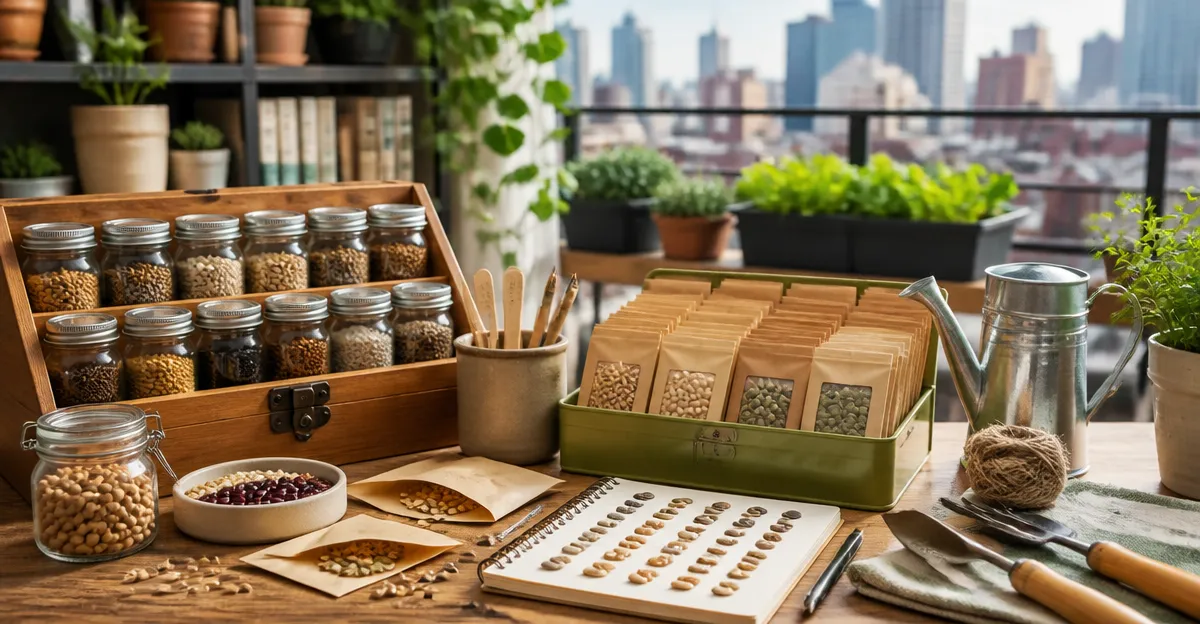
How to Build an Urban Heirloom Seed Bank in Small Spaces: A Practical Guide
Introduction
Urban gardeners often face the challenge of preserving heirloom seeds while contending with limited square footage. This guide explains the essential concepts, strategic planning steps, and product recommendations that enable a reliable seed bank in apartments, balconies, or rooftop gardens. Readers will learn how to select storage containers, organize by species, and maintain seed viability throughout the year. By the end of the article, one will possess a clear roadmap for establishing a resilient heirloom seed repository.
Background and Context
Heirloom seeds represent genetic diversity that has been cultivated for generations, offering unique flavors, colors, and resilience. In urban environments, seed loss can occur quickly due to temperature fluctuations, moisture, and accidental exposure to light. Understanding the biology of seed dormancy, moisture content, and temperature thresholds is fundamental to effective preservation. This background equips gardeners with the knowledge required to make informed decisions about storage solutions.
Planning Your Seed Bank Space
The first step is to assess the available area and determine a location that remains cool, dry, and dark. A closet shelf, under‑counter cabinet, or a dedicated drawer can serve as an optimal micro‑climate when insulated properly. For gardeners who require mobility, the HomePekite 38‑Slot Seed Organizer provides a portable insulated bag with a sturdy handle, allowing easy relocation without compromising seed protection.
This organizer includes 38 clear plastic containers, each capable of holding 150‑300 seed packets, and comes with 40 label sheets for precise identification. The black Oxford cloth exterior is waterproof and UV‑resistant, extending seed longevity in environments such as basements or garages. At a price of $29.99 and a rating of 4.7 stars from 381 reviews, it offers excellent value for small‑space gardeners seeking organized, insulated storage.
When space is extremely limited, consider stacking the organizer vertically or placing it on a higher shelf to free floor area for other gardening activities. The zippered closure ensures that moisture does not infiltrate the interior, a critical factor for maintaining seed viability.
Selecting Appropriate Storage Containers
Different storage containers excel in specific scenarios; selecting the right one depends on budget, durability requirements, and aesthetic preferences. Metal containers provide robust protection against physical damage and pests, while plastic containers offer lightweight portability.
The Orionstar Metal Seed Storage Box is a premium option featuring four deep compartments, a vintage dark‑green finish, and integrated safety locks. Its dimensions of 13.2" x 7.3" x 5.2" accommodate standard 3x5 seed packets upright, facilitating rapid browsing. Priced at $34.99 with a 4.8‑star rating from 440 reviews, it is ideal for gardeners who value durability and a classic aesthetic.
The box also includes 30 thick seed envelopes, waterproof plant labels, and a marker pen, creating a complete starter kit for seed indexing. Heavy‑duty alloy steel construction ensures long‑term use, making it suitable for both indoor and outdoor environments.
For gardeners who prefer a more compact solution, the HomePekite 26‑Slot Seed Organizer offers a smaller footprint while retaining the insulated bag design. It holds 26 containers capable of storing 80‑200 seed packets, and it is priced at $22.99 with a 4.7‑star rating. This model is advantageous for those who have a modest seed collection or limited storage space.
Finally, the RGJ 60‑Slot Seed Storage Box provides the highest capacity among the featured products. Constructed from rust‑proof metal with a powder‑coated finish, it includes three independent compartments, safety locks, and a handle for easy transport. At $32.99 and a 4.8‑star rating, it is an excellent choice for extensive heirloom collections that require segregation of tools and accessories.
Organizing by Species and Preservation Techniques
Effective organization begins with categorizing seeds by botanical family, growth habit, and harvest season. Use the label sheets supplied with each organizer to record species name, collection date, and provenance. This practice simplifies future planting schedules and supports traceability for seed saving initiatives.
In addition to physical labeling, maintain a digital spreadsheet that mirrors the information on the physical tags. Include columns for germination rate, storage temperature, and moisture content. Such redundancy safeguards against loss of information if labels become damaged.
When storing heirloom seeds, aim for a moisture content of 5‑8 percent and a temperature range of 40‑50°F (4‑10°C). The insulated bags of the HomePekite organizers help buffer temperature swings, while the metal construction of the Orionstar and RGJ boxes provides a stable environment when placed in a cool pantry.
For seeds that are particularly sensitive to light, the RGJ box’s light‑proof lid offers an additional layer of protection, ensuring that photosensitive compounds do not degrade over time.
Maintaining Viability and Record Keeping
Seed viability declines gradually; therefore, conduct germination tests annually to assess the health of stored collections. A simple test involves placing 10 seeds on a moist paper towel, sealing them in a plastic bag, and keeping them at the recommended temperature for seven days.
Record the germination percentage in your spreadsheet and replace any seed batch that falls below 80 percent viability. Rotating older seeds into the planting cycle ensures that the bank remains fresh and that valuable genetic material is not lost.
Periodically inspect containers for signs of moisture intrusion, pest damage, or label wear. Re‑seal any compromised zippered bags and replace damaged labels promptly. The durable construction of the Orionstar and RGJ containers reduces the likelihood of such issues.
Finally, consider sharing surplus seeds with community gardens or local seed swaps. This practice not only promotes biodiversity but also creates a network of backup repositories that can rescue a collection in the event of catastrophic loss.
Comparison and Selection Guide
| Product | Capacity | Material | Key Features | Price | Rating |
|---|---|---|---|---|---|
| HomePekite 38‑Slot Seed Organizer | 150‑300 packets | Oxford cloth insulated bag + plastic containers | Insulated, 40 labels, portable handle | $29.99 | 4.7/5 (381) |
| Orionstar Metal Seed Storage Box | 30 packets + accessories | Alloy steel | Four compartments, safety latch, vintage finish | $34.99 | 4.8/5 (440) |
| HomePekite 26‑Slot Seed Organizer | 80‑200 packets | Oxford cloth insulated bag + plastic containers | Compact, 40 labels, lightweight | $22.99 | 4.7/5 (381) |
| RGJ 60‑Slot Seed Storage Box | 60 bottles + 20 envelopes | Powder‑coated metal | Three compartments, safety locks, light‑proof lid | $32.99 | 4.8/5 (243) |
Best Practices & Tips
- Store seed containers in a location that remains below 50°F (10°C) year‑round.
- Use silica gel packets inside insulated bags to absorb residual moisture.
- Label each container with both a human‑readable name and a barcode for future digitization.
- Group seeds by planting season to streamline garden planning.
- Inspect containers quarterly for signs of condensation or pest entry.
- Rotate older seeds into the planting cycle to maintain genetic vigor.
- Document every seed accession in a cloud‑based spreadsheet for remote access.
Frequently Asked Questions
What temperature is optimal for storing heirloom seeds?
The ideal temperature range is 40‑50°F (4‑10°C). Cooler temperatures slow metabolic processes and extend viability.
How often should I test seed germination?
Conduct a germination test at least once per year, preferably in the fall after the harvest season.
Can I store seeds in a refrigerator?
Yes, a standard refrigerator set to the appropriate temperature can serve as an effective storage environment, provided that seeds are sealed in airtight containers to prevent moisture absorption.
Do metal seed boxes protect against humidity?
Metal boxes such as the Orionstar and RGJ models provide a solid barrier against external humidity, especially when used with internal silica packets and sealed lids.
Is it necessary to label seeds with collection dates?
Labeling with collection dates is essential for tracking seed age, as viability typically declines after five to ten years depending on species.
How many seed packets can a small apartment gardener realistically store?
Using a compact organizer like the HomePekite 26‑Slot Seed Organizer, an urban gardener can comfortably store up to 200 packets while maintaining easy access.
Conclusion
Building an urban heirloom seed bank in small spaces is achievable through careful planning, appropriate container selection, and disciplined maintenance. By leveraging insulated bags, metal boxes, and systematic labeling, one can safeguard genetic diversity for future harvests. The strategies outlined in this guide empower gardeners to create resilient seed repositories that thrive despite spatial constraints.
Products Featured in This Guide
HomePekite 38‑Slot Seed Organizer
Price: $29.99 | Rating: 4.7/5 (381 reviews)
Featured for its insulated bag, high capacity, and portable design, making it ideal for limited urban spaces.
Orionstar Metal Seed Storage Box
Price: $34.99 | Rating: 4.8/5 (440 reviews)
Featured for its robust steel construction, four‑compartment layout, and integrated safety latch.
HomePekite 26‑Slot Seed Organizer
Price: $22.99 | Rating: 4.7/5 (381 reviews)
Featured for its compact size, insulated bag, and affordability for modest seed collections.
RGJ 60‑Slot Seed Storage Box
Price: $32.99 | Rating: 4.8/5 (243 reviews)
Featured for its high capacity, rust‑proof metal construction, and safety‑lock features suitable for extensive heirloom archives.