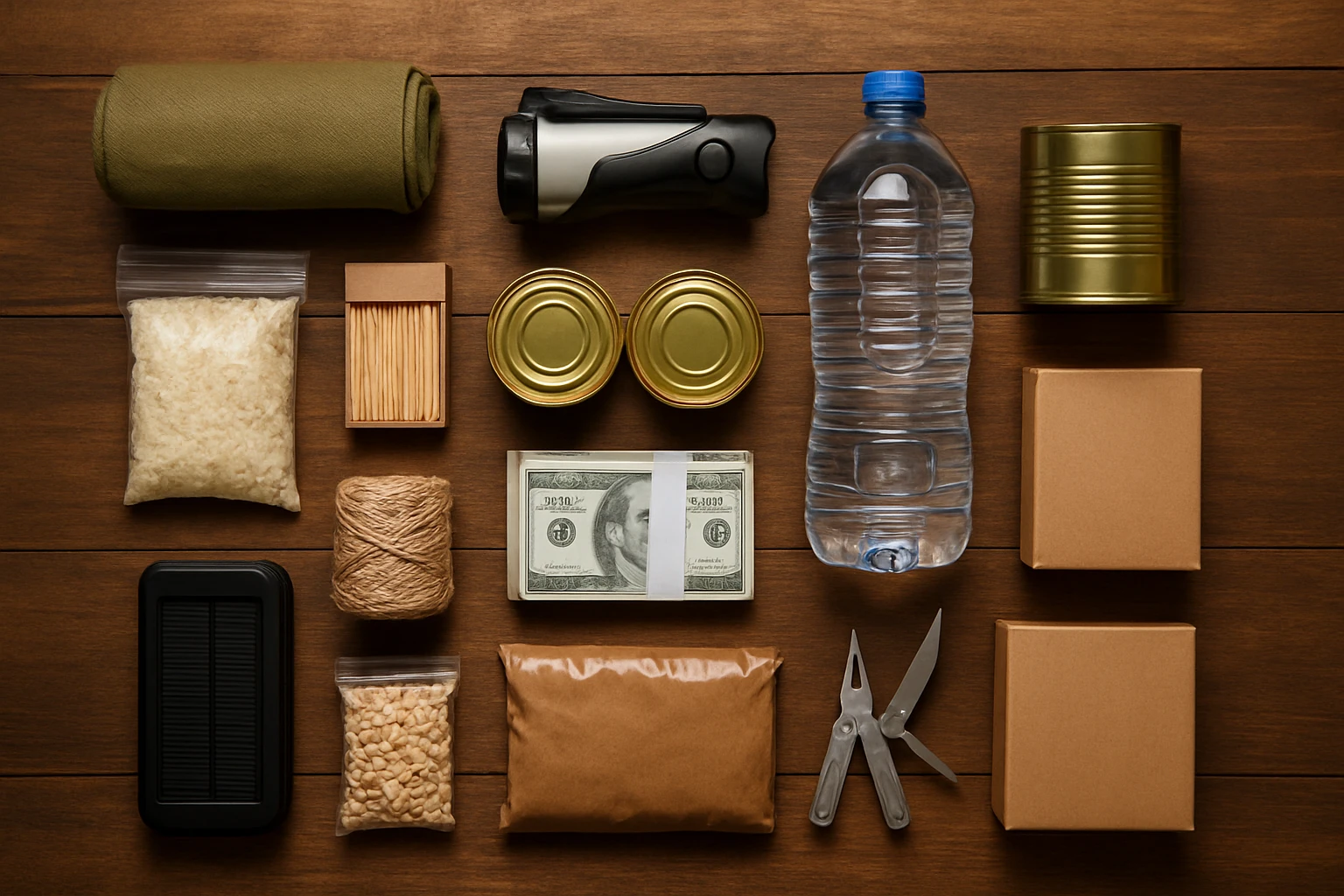
How to Build an Emergency Barter Kit for Disaster: Step‑by‑Step Guide to Essential Trade Items
Introduction
In a disaster scenario, the ability to trade valuable resources can be as important as personal survival skills. This guide explains how to construct an emergency barter kit that contains items with high demand and long shelf life. The reader will learn which trade items provide the greatest utility, how to acquire them efficiently, and how to package them for rapid deployment. By following the steps, one can create a kit that supports both personal resilience and community exchange during crises.
The recommendations are based on real products that have proven performance, favorable customer feedback, and reasonable cost. While the guide remains useful without purchasing any specific item, the suggested tools streamline the process and enhance the overall reliability of the kit. The tone remains professional and authoritative, ensuring that intermediate readers can implement the plan with confidence.
What You Will Need
- Clean drinking water supplies
- Long‑term food items suitable for trade
- Portable lighting for night‑time exchanges
- Durable containers and labeling materials
- Basic tools for packaging and maintenance
Step 1: Secure a Reliable Source of Clean Water
Water holds the highest trade value in most emergency situations because it is essential for survival and cannot be easily substituted. The SOS Emergency Water Pouches provide 4.2 fl oz of triple‑purified water per pouch, making them ideal for individual trade transactions. Each 12‑pack costs $16.99 and carries a rating of 4.8/5.0 from 52 verified reviews, indicating strong consumer confidence.
Key features include reverse‑osmosis filtration, UV sterilization, and ozonation, which together ensure that the water remains safe even after extended storage. The pouches are US Coast Guard and US Navy approved, offering an extra layer of credibility for potential trade partners. Their extreme durability, with a burst strength of 862 lb and resistance to temperatures ranging from -22°F to +149°F, prevents breakage during transport or storage. By allocating a portion of the barter kit to these water pouches, one guarantees a commodity that is universally sought after.
Step 2: Add High‑Calorie, Shelf‑Stable Food Items
Food items that require minimal preparation and possess a long shelf life are valuable trade assets. Two products meet these criteria: Augason Farms Dehydrated Potato Slices and SOS Emergency Food Bars. The dehydrated potato slices cost $22.22 for a 15‑serving can and have a rating of 4.7/5.0 from 6,942 reviews. They require only water and heat to rehydrate, making them practical for both personal consumption and trade.
The food bars are sold as an 18‑pack for $49.99, with a rating of 4.2/5.0 from 36 reviews. Each bar delivers 400 calories and is formulated to be non‑thirst provoking, an important attribute when water is scarce. Both products boast a shelf life of 25 years for the potatoes and 5 years for the bars, ensuring that the barter kit remains viable for many years. Their compact packaging allows for easy stacking and labeling, which simplifies inventory management.
Step 3: Incorporate Portable Lighting for Night‑Time Transactions
In many disaster scenarios, darkness can impede trade negotiations and safety. A compact, reliable light source therefore adds significant value to a barter kit. The FLY2SKY LED Tent Lamp is a palm‑sized lantern that runs on three AAA batteries and provides up to 150 lumens of illumination. Priced at $12.99 and rated 4.6/5.0 from 8,802 reviews, it offers high brightness with three selectable modes: high, low, and strobe.
Its IPX8 water resistance and durable ABS construction ensure operation in wet conditions, while the built‑in carabiner hook allows the lamp to be attached to backpacks, tent lines, or other gear. The lamp’s small footprint makes it easy to include in a portable container without adding excessive weight. When offered in a barter situation, the lamp can be exchanged for food, medical supplies, or other essential items, providing a versatile trade lever.
Step 4: Package, Label, and Organize the Kit
Effective packaging protects the items from environmental damage and facilitates quick identification. Use sturdy, resealable plastic bins or waterproof duffel bags to contain the water pouches, food items, and lamp. Each category should be placed in a separate compartment, and a clear label indicating the contents, expiration date, and quantity should be affixed to the exterior.
For labeling, employ a permanent marker or printed labels that can withstand moisture. Arrange the items so that the most frequently traded goods—water and food—are accessible without disturbing the lamp. This organization reduces the time needed to retrieve an item during a high‑stress exchange, thereby improving the overall efficiency of the barter process.
Step 5: Store the Kit and Implement a Rotation Schedule
Proper storage extends the useful life of the barter kit. Keep the kit in a cool, dry location away from direct sunlight, such as a basement shelf or a climate‑controlled closet. The water pouches, food bars, and dehydrated potatoes all benefit from stable temperature conditions to maintain their shelf life specifications.
Implement a rotation schedule that replaces any item approaching its expiration date with a fresh equivalent. For example, every six months, inspect the water pouches and replace any that are older than three years. This practice ensures that the kit remains ready for immediate deployment and preserves its trade value over time.
Tips & Pro Tips
- When acquiring bulk supplies, compare unit prices to maximize cost efficiency.
- Consider adding a small first‑aid kit to increase the overall trade value of the package.
- Maintain a spare set of AAA batteries for the LED lamp to avoid reliance on external power sources.
- Document the kit’s inventory on a waterproof notepad to track usage and rotation.
- Practice a mock trade scenario with a trusted partner to familiarize yourself with the process.
Troubleshooting
Problem: Water pouches appear swollen or damaged.
Solution: Inspect each pouch before use; discard any that show signs of leakage or bulging, as these indicate compromised integrity. Replace damaged units with new pouches to retain trade credibility.
Problem: Dehydrated potatoes do not rehydrate properly.
Solution: Ensure that water is at a rolling boil before adding to the potatoes, and allow sufficient soaking time (approximately 10‑15 minutes). Adjust water temperature if the ambient conditions are extremely cold.
Conclusion
By following the outlined steps, one can construct an emergency barter kit that combines high‑value trade items, durable packaging, and a sustainable rotation plan. The inclusion of clean water, nutrient‑dense food, and reliable lighting creates a balanced portfolio of commodities that are universally sought after during disasters. The guide emphasizes practicality, ensuring that the kit remains functional and valuable without requiring excessive expenditure.
Readers are encouraged to tailor the kit to their specific regional risks and to periodically review the inventory to maintain readiness. A well‑prepared barter kit not only enhances personal survival prospects but also contributes to community resilience when shared responsibly.
Products Mentioned in This Guide
Frequently Asked Questions
What items are considered high‑value for a disaster barter kit?
Items with long shelf life and universal demand—such as water, non‑perishable food, medical supplies, fuel, and portable lighting—are the most valuable for trade.
How much water should I include in my emergency barter kit?
Include at least one gallon of clean drinking water per person per day for a minimum of three days, packaged in durable containers.
Can I use regular canned food for barter, or are specialty items better?
Regular canned goods are fine, but high‑protein, calorie‑dense foods like beans, peanut butter, and freeze‑dried meals are more sought after in emergencies.
What is the best way to package and protect barter items for rapid deployment?
Store items in waterproof, resealable bags or sturdy plastic bins, label them clearly, and keep the kit in a portable, hard‑shelled case.
How often should I rotate the supplies in my barter kit?
Check the kit every six months and replace any items that are near expiration to ensure everything remains usable.