How to Budget Emergency Power with Solar Batteries: Complete Guide to Sizing, Prioritizing Loads, and Maximizing Backup Runtime
Introduction
Power outages, natural disasters, and off‑grid adventures demand reliable backup energy. This guide explains how to budget emergency power using solar batteries, how to calculate the appropriate capacity, which loads should receive priority, and which techniques extend runtime the most. Readers will also discover a portable solar solution that complements larger systems, enabling flexible, on‑the‑go charging when traditional setups are unavailable.
By the end of this article, one will be able to design a cost‑effective emergency power plan, choose the right equipment, and implement best‑practice habits that keep essential devices running when the grid fails.
Background and Context
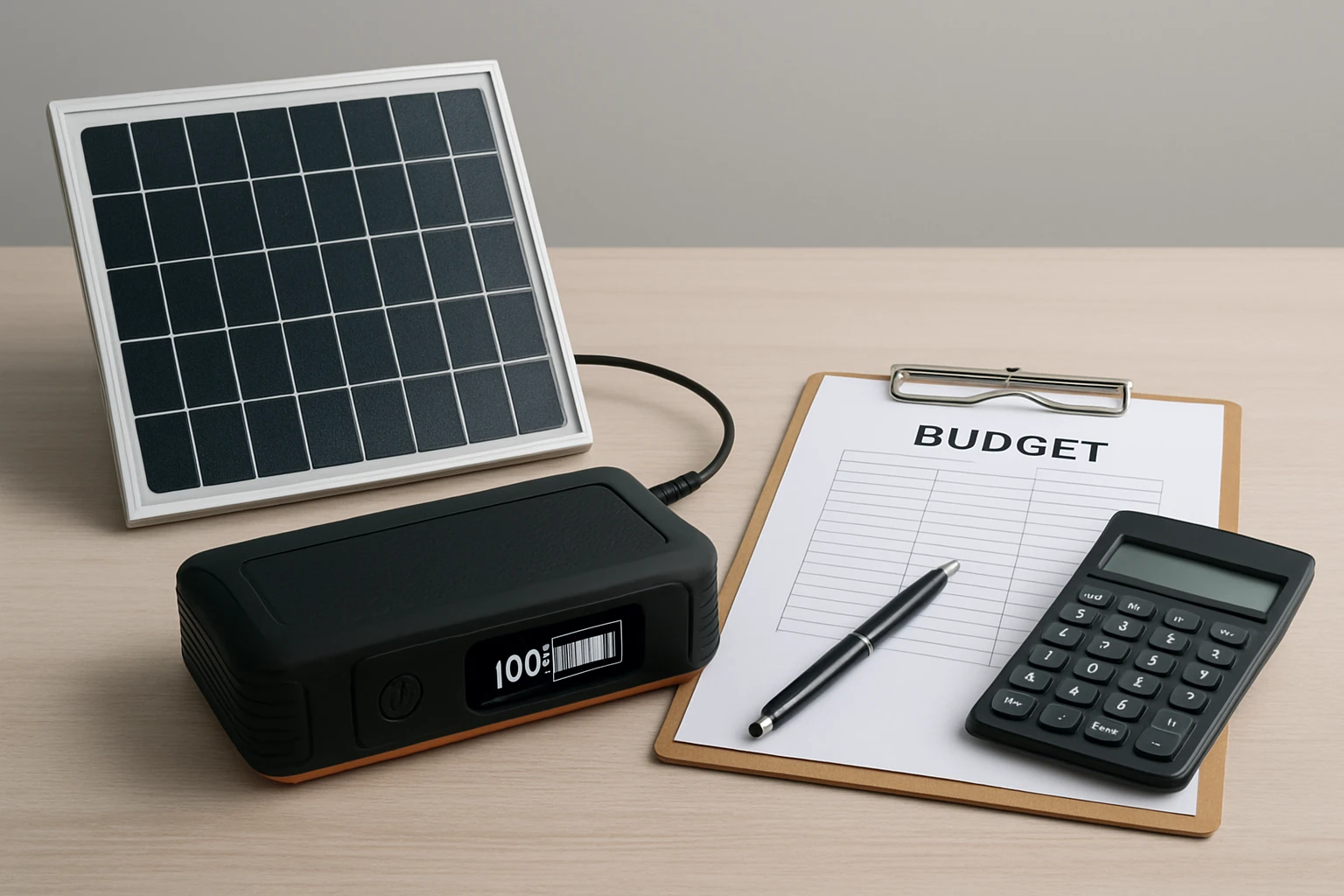
Solar battery backup combines photovoltaic (PV) panels, a charge controller, a battery bank, and an inverter. The PV panels convert sunlight into electricity, which the controller stores in batteries for later use. During an outage, the inverter transforms the DC power from the batteries into AC power suitable for household appliances.
Key terms that often appear in discussions include:
- Battery capacity (Wh): The amount of energy a battery can store, expressed in watt‑hours.
- Depth of discharge (DoD): The percentage of battery capacity that can be safely used without shortening lifespan.
- Peak sun hours (PSH): The equivalent number of full‑sun hours per day a location receives, a critical factor for sizing PV arrays.
- Round‑trip efficiency: The ratio of usable energy out of the battery compared to the energy stored, typically 80‑90% for lithium systems.
Understanding these concepts provides a solid foundation for budgeting emergency power that meets both financial and reliability goals.
Sizing Your Solar Battery System
Accurate sizing begins with a clear inventory of essential loads. List every device you intend to keep operational during an outage, then note its power draw (watts) and required runtime (hours). Multiply these values to calculate the total energy demand in watt‑hours (Wh).
Example calculation for a modest household:
- LED lighting: 10 W × 4 h = 40 Wh
- Refrigerator (energy‑efficient): 120 W × 8 h = 960 Wh
- Communication devices (phone charger, router): 20 W × 12 h = 240 Wh
- Medical equipment: 50 W × 6 h = 300 Wh
The total demand equals 1,540 Wh. Applying a 50 % DoD for a lithium battery (to preserve longevity) requires a battery bank of at least 3,080 Wh (1,540 Wh ÷ 0.5). Converting to amp‑hours at a 12 V system yields roughly 257 Ah (3,080 Wh ÷ 12 V).
Next, determine the PV array size needed to replenish the battery within a typical sunny day. Assuming 5 PSH, a 400 W solar array would generate about 2,000 Wh (400 W × 5 h), sufficient to restore most of the consumed energy while leaving margin for cloudy periods.
Prioritizing Critical Loads
When power is limited, not all devices can run simultaneously. Prioritization ensures that life‑supporting and safety‑related equipment receives power first. Create a tiered list:
- Tier 1 – Life‑sustaining: Medical devices, communication tools, refrigeration for medication.
- Tier 2 – Safety and security: Lighting, security system, smoke detectors.
- Tier 3 – Comfort and convenience: Entertainment, non‑essential appliances.
Using a manual transfer switch or a smart inverter with load‑shedding capabilities allows automatic switching between tiers based on battery state of charge.
Maximizing Runtime with Efficient Practices
Even a well‑sized system can fall short if devices operate inefficiently. Implement the following strategies to stretch runtime:
- Use LED lighting: LEDs consume up to 80 % less power than incandescent bulbs.
- Optimize refrigerator settings: Keep the thermostat at 37 °F (3 °C) and minimize door openings.
- Employ low‑power charging modes: Many smartphones have “eco‑mode” charging that reduces draw.
- Leverage passive cooling: In moderate climates, use natural ventilation instead of electric fans.
Combining these habits with proper system sizing can increase backup duration by 30‑50 %.
Integrating Portable Solar Power Banks
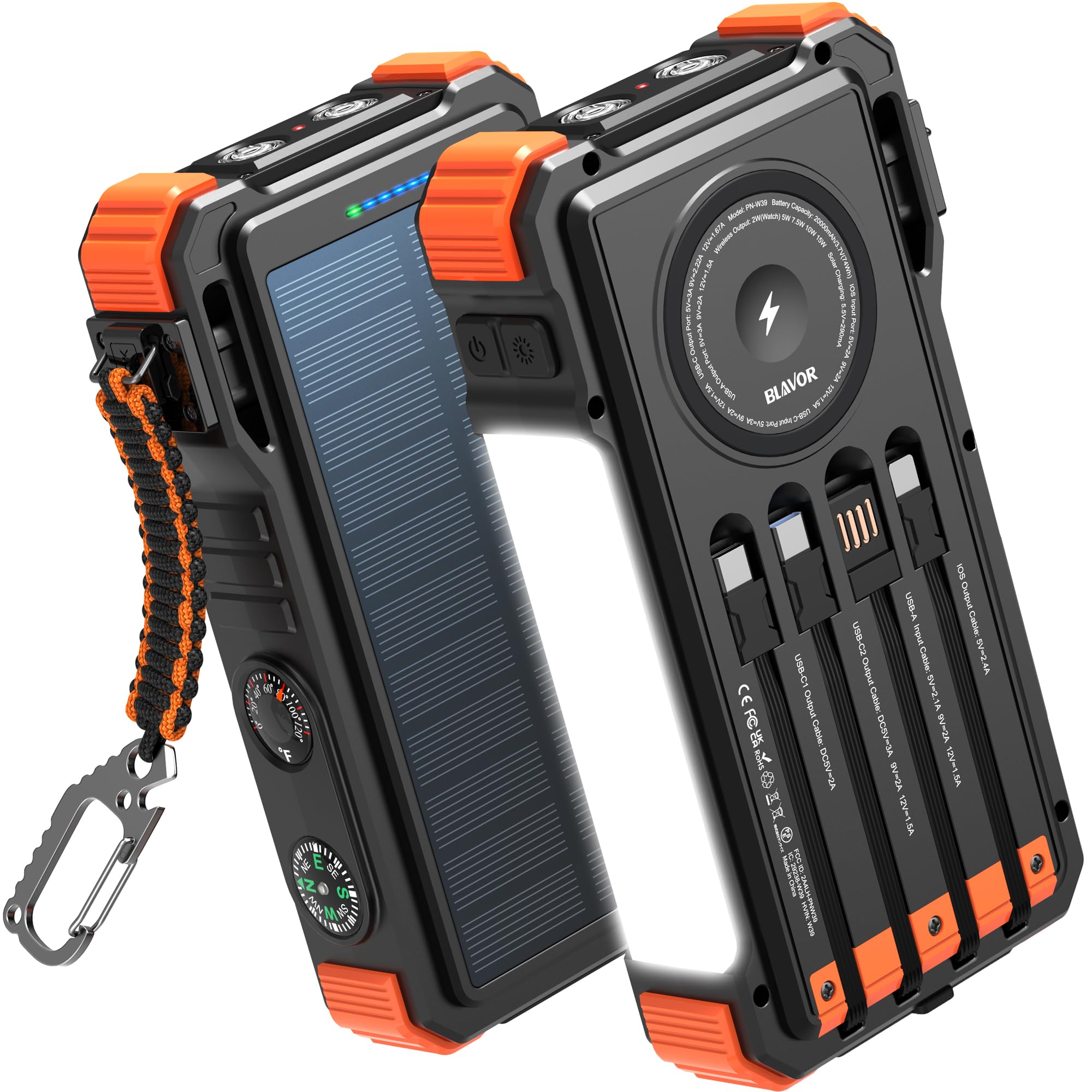
For situations where a full‑scale solar array is impractical—such as short‑term camping trips, car emergencies, or as a supplemental charge source—a high‑capacity portable solar power bank offers valuable flexibility. One product that stands out is the BLAVOR Solar Power Bank. This 20,000 mAh unit includes built‑in cables, a 20 W USB‑C fast‑charge port, and a wireless charging pad compatible with phones and Apple Watches.
Key specifications that make it suitable for emergency power budgeting include:
- Capacity: 20,000 mAh (approximately 74 Wh) – enough for up to four iPhone 17 charges.
- Simultaneous charging of up to six devices via built‑in cables and wireless pad.
- Integrated solar panel for trickle charging when sunlight is available.
- Additional tools: flashlight, camping light, compass, thermometer, and a carabiner, turning the unit into a multi‑purpose survival accessory.
- Safety features: over‑charge, over‑discharge, over‑current, and short‑circuit protection.
- Price: $39.99 with a 4.5‑star rating from 1,132 reviews, indicating strong consumer satisfaction.
In a larger emergency system, the BLAVOR bank can serve as a bridge power source, providing immediate charge for communication devices while the main battery bank is being replenished by solar panels.
Comparison and Selection Guide
Choosing the right backup solution depends on budget, space, and power requirements. The table below contrasts three common categories:
| Option | Typical Capacity | Typical Cost | Portability | Best Use Case |
|---|---|---|---|---|
| Portable Solar Power Bank (e.g., BLAVOR) | ~74 Wh | $40 | High – fits in a backpack | Short trips, emergency car kits |
| Mid‑size Lithium Battery (12 V, 200 Ah) | 2,400 Wh | $600‑$800 | Medium – requires dedicated storage | Home backup for essential loads |
| Large Off‑grid System (48 V, 1,000 Ah) | 48,000 Wh | $4,000‑$6,000 | Low – permanent installation | Full‑home or cabin off‑grid living |
When budgeting, start with the smallest tier that satisfies critical loads. If the total demand is under 1,000 Wh, a combination of a mid‑size lithium bank and a portable power bank like BLAVOR often provides the best cost‑to‑benefit ratio.
Best Practices & Tips
- Perform a load audit annually: Replace outdated appliances with more efficient models to reduce demand.
- Maintain battery health: Store batteries at 50‑70 % charge during long periods of inactivity and keep terminals clean.
- Test the system regularly: Simulate an outage once per quarter to verify that all components operate as expected.
- Combine solar with wind or generator backup: Diversifying energy sources mitigates weather‑related shortfalls.
- Document wiring diagrams and component serial numbers: This simplifies troubleshooting and warranty claims.
Frequently Asked Questions
- How many solar panels are needed to fully charge a 20,000 mAh power bank? Assuming 5 PSH and a 5 W panel, it would take roughly 2‑3 hours of direct sunlight. Larger panels reduce charging time proportionally.
- Can I use a solar power bank to charge a laptop? The BLAVOR model provides a USB‑C port capable of 20 W output, sufficient for many ultrabooks and tablets but insufficient for high‑power laptops that require 45‑65 W.
- What is the optimal depth of discharge for lithium batteries in an emergency system? Keeping discharge under 50 % maximizes cycle life while still delivering ample energy for most short‑term outages.
- Is it safe to connect multiple solar power banks in parallel? Parallel connections are technically possible but require a charge controller that can manage combined input to avoid over‑charging and ensure balanced voltage.
- How often should I replace my solar batteries? Lithium batteries typically retain 80‑90 % capacity after 2,000‑3,000 cycles, translating to 5‑10 years in typical residential use.
- Do solar power banks work in low‑light conditions? They can trickle‑charge in indirect light, but charging rates drop dramatically; for reliable backup, rely on a dedicated PV array.
- What maintenance does the BLAVOR Solar Power Bank require? Keep the solar panel surface clean of dust and debris, store the unit in a cool, dry place when not in use, and periodically run a full charge‑discharge cycle to calibrate the battery gauge.
Conclusion
Budgeting emergency power with solar batteries involves understanding energy demand, sizing storage and generation appropriately, and prioritizing loads to ensure safety and functionality. By applying the calculations and strategies outlined above, one can design a resilient system that balances cost with reliability. Complementary devices such as the BLAVOR Solar Power Bank add flexibility for on‑the‑go charging, making the overall solution adaptable to both home and outdoor scenarios.
Products Featured in This Guide
BLAVOR Solar Power Bank
Price: $39.99
Rating: 4.5 out of 5 stars (1,132 reviews)
Featured because it provides a high‑capacity, multi‑device charging solution with built‑in solar capability, making it an ideal supplemental power source for emergency and outdoor scenarios.