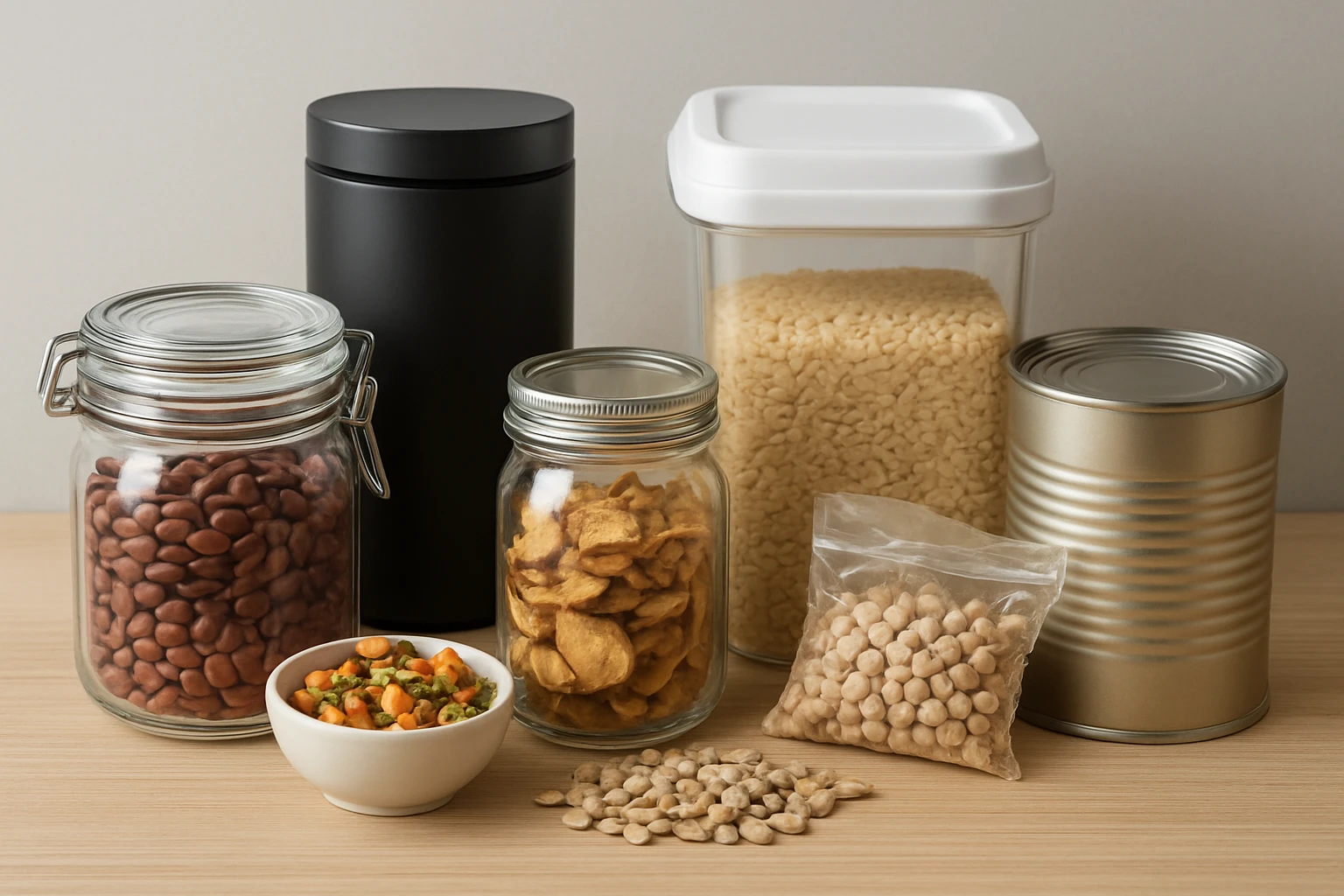
How to Store Food Without Electricity Long-Term: 12 Proven Off-Grid Preservation Methods
One will discover practical techniques that enable safe, long‑term food storage without reliance on electrical power. This guide explains twelve proven methods, each supported by clear, actionable steps. One will also learn why certain tools, such as airtight canisters and a food dehydrator, improve results and simplify the process. By the end, one will feel confident in preserving a wide variety of foods for months or even years.
What You'll Need
- Prepara Evak Medium Airless Canister – $35.00, 4.5/5 rating (254 reviews)
- Magic Mill 5‑Tray Food Dehydrator – $59.99, 4.4/5 rating (4,693 reviews)
- Food‑grade buckets, glass jars, fermentation crocks, sea‑salt, vinegar, spices, and clean cloths.
- Cool, dark storage area such as a root cellar, basement, or insulated shed.
- Basic tools: sharp knives, cutting board, kitchen scale, and a thermometer.
Step 1 – Seal Moisture‑Sensitive Items in an Airtight Container
One should begin by placing dry goods such as coffee beans, herbs, or granola into an airtight environment. The Prepara Evak Medium Airless Canister creates a vacuum seal without mechanical pumps; the lid functions as a plunger, pushing air out as it is pressed down. This design prevents oxidation, which is the primary cause of flavor loss and microbial growth. By storing items in this canister, one extends freshness for weeks to months compared with ordinary plastic containers.
Step 2 – Dehydrate Fruits, Vegetables, and Meats
Dehydration removes water, the essential element for bacterial proliferation. The Magic Mill 5‑Tray Food Dehydrator offers five stainless‑steel trays, adjustable spacing, and a digital timer ranging from 95°F to 167°F, allowing precise control for delicate fruits and robust jerky. One can dry apple slices in 6‑8 hours, resulting in lightweight snacks that store for up to a year when kept in the airtight canister from Step 1. The unit’s 240 W heating element ensures even drying while retaining up to 97 % of nutrients.
Step 3 – Ferment Vegetables for Probiotic Preservation
Fermentation relies on beneficial bacteria to convert sugars into lactic acid, creating an inhospitable environment for spoilage organisms. One should shred cabbage, carrots, or beets, then pack them tightly into a clean glass jar, adding a 2 % salt solution. The jar must be sealed loosely to allow gases to escape while preventing oxygen entry. After 5‑14 days at room temperature, the vegetables develop a tangy flavor and can be stored for several months in a cool, dark place.
Step 4 – Create a Root Cellar for Temperature‑Stable Storage
A root cellar exploits the earth’s natural insulation to maintain temperatures between 32°F and 55°F with high humidity. One should dig a shallow pit or repurpose a basement corner, line it with sand, and store root vegetables such as potatoes, carrots, and turnips in breathable burlap sacks. The constant coolness slows enzymatic activity, allowing produce to remain edible for 4‑6 months.
Step 5 – Water‑Bath Can Preserve High‑Acid Foods
Water‑bath canning is ideal for tomatoes, pickles, and fruit preserves, which have a pH below 4.6. One must fill sterilized jars with the prepared food, leaving a ¼‑inch headspace, then process them in a boiling water bath for the recommended time. The heat destroys microorganisms, and the sealed jars prevent re‑contamination. Properly processed jars can be stored for up to one year without refrigeration.
Step 6 – Pressure Can Low‑Acid Foods for Safe Long‑Term Storage
Low‑acid foods such as beans, meat, and most vegetables require pressure canning to achieve temperatures above 240°F. One should load prepared foods into jars, seal with new lids, and process them in a pressure canner at 10‑15 psi for the specified duration. The high pressure eliminates botulism‑producing spores, ensuring safety for up to two years.
Step 7 – Smoke Meats and Fish for Flavorful Preservation
Smoking infuses food with phenolic compounds that act as natural preservatives while adding a distinct taste. One should cure the meat with a salt‑sugar mixture, then expose it to low‑temperature smoke (180‑200°F) for several hours. The process reduces moisture and introduces antimicrobial agents. Smoked products stored in the airtight canister remain safe for several months.
Step 8 – Pickle Vegetables in Vinegar Brine
Pickling uses acidic vinegar to inhibit bacterial growth. One should submerge sliced cucumbers, onions, or peppers in a brine of 1 part vinegar to 1 part water, flavored with spices and sugar. After a brief fermentation period of 24‑48 hours, the jars are sealed and can be stored for up to six months. The high acidity prevents spoilage even without refrigeration.
Step 9 – Salt‑Cure Meats for Long‑Term Dry Storage
Salt draws moisture from muscle tissue, creating an environment unsuitable for microbes. One should rub a lean cut of pork or beef with a mixture of coarse salt, sugar, and optional spices, then let it rest in a cool area for several days. After curing, the meat is rinsed, patted dry, and hung in a well‑ventilated space. Properly cured meat can be stored for up to a year.
Step 10 – Use Desiccant Packs to Protect Sensitive Items
Silica gel packets absorb residual moisture in containers, extending shelf life of items such as dried herbs, spices, and jerky. One should place one or two packets in each storage jar or canister, ensuring they do not contact food directly. The desiccant maintains a low‑humidity environment, preventing mold growth during long‑term storage.
Step 11 – Store Foods in a Cool, Dark Environment
Heat and light accelerate oxidation, leading to nutrient loss and off‑flavors. One should locate storage containers away from direct sunlight, using opaque bins or wrapping jars in cloth. Maintaining a stable temperature below 70°F further slows enzymatic reactions, allowing grains, beans, and nuts to remain fresh for 12‑18 months.
Step 12 – Rotate Stock Regularly to Ensure Freshness
Even the best preservation methods benefit from periodic turnover. One should label each container with the date of processing and arrange items on a “first‑in, first‑out” basis. By consuming older supplies before newer ones, one minimizes waste and guarantees that the food consumed is at peak quality.
Tips & Pro Tips
- Label every jar or canister with contents and date; this practice simplifies rotation and inventory management.
- When using the Prepara Evak Medium Airless Canister, press the lid firmly until a audible “whoosh” confirms air removal.
- For optimal dehydration, slice produce uniformly (about ¼‑inch thick) to ensure even drying.
- Maintain a humidity level of 85‑90 % in a root cellar to prevent desiccation of stored roots.
- Sanitize all tools and containers with a dilute bleach solution (1 tablespoon per gallon) before use.
Troubleshooting
- Canister does not seal properly: Ensure the lid rim is clean and free of debris; press the lid slowly to allow the twin‑valve system to expel air fully.
- Dehydrator leaves food moist: Increase temperature by 5‑10°F and extend drying time; verify that trays are not overloaded.
- Fermented vegetables develop surface mold: Reduce exposure to oxygen by pressing vegetables down tightly and using a fermentation weight.
- Canned goods show cloudiness after processing: This is often harmless; however, verify seals and store in a cool place to avoid spoilage.
Conclusion
One now possesses twelve reliable, electricity‑free methods for preserving food, each supported by clear, step‑by‑step instructions. By integrating tools such as the Prepara Evak Medium Airless Canister and the Magic Mill 5‑Tray Food Dehydrator, one can maximize freshness, safety, and shelf life. Consistent application of these techniques will empower any off‑grid household to maintain a nutritious, resilient food supply.
Products Mentioned in This Guide
Frequently Asked Questions
What are the most reliable off‑grid methods for long‑term food preservation?
The top methods include dehydration, fermentation, root cellar cooling, canning in airtight containers, and using salt or vinegar for brining.
Why are airtight canisters like the Prepara Evak important for electricity‑free storage?
They prevent moisture and pests from entering, extending shelf life by keeping foods dry and protected without refrigeration.
Can a food dehydrator replace traditional sun‑drying for off‑grid preservation?
Yes, a dehydrator provides consistent temperature and airflow, allowing faster, safer drying regardless of weather.
What type of storage space is ideal for preserving foods without power?
A cool, dark, and well‑ventilated area such as a root cellar, basement, or insulated shed maintains stable temperatures and humidity.
How long can foods stored in airless canisters or jars last?
When kept in a cool, dark environment, most dried, fermented, or brined foods can remain safe and tasty for several months to several years.