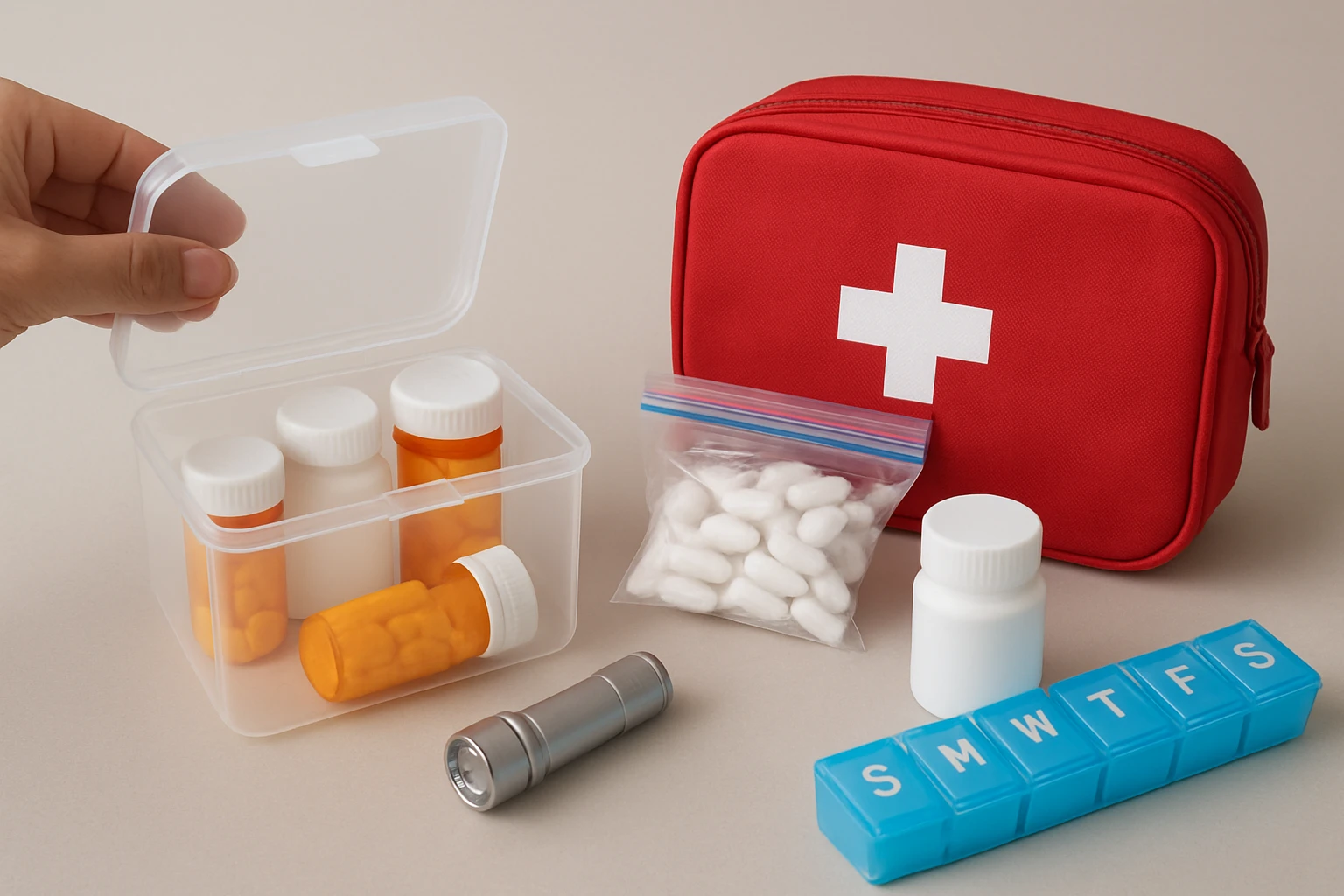
How to Store Prescription Meds for Emergencies: A Complete, Safe Step‑by‑Step Guide
Introduction
The ability to access prescription medication quickly during an emergency can protect health, reduce anxiety, and prevent complications. This guide explains how to organise, label, and store medicines so that they remain effective, secure, and easy to retrieve. Readers will learn which materials are most reliable, how to create a logical layout, and how to maintain the system over time. By following the steps, one can ensure that essential drugs are always ready when needed.
Although the guide recommends specific tools, the principles apply regardless of the containers chosen. The recommendations are based on durability, transparency, portability, and user‑friendly features, which are essential for emergency preparedness.
What You'll Need
- A sturdy, waterproof container for bulk storage (e.g., a first‑aid box).
- A transparent organizer with detachable trays for quick visual identification.
- A pill organizer that separates doses by time of day.
- Water‑resistant labels or a permanent marker.
- Silica packets or a small dehumidifier to control moisture.
- Optional: a small flashlight and a copy of medication instructions.
Step 1 – Select a Durable Primary Container
The first step is to choose a container that will protect medicines from physical damage, moisture, and accidental opening. A well‑designed primary container should be made of heavy‑duty plastic, feature a secure latch, and have an ergonomic handle for transport. The BangQiao First Aid Box satisfies these criteria. It is constructed from premium plastic, offers an oval shape that maximises interior space, and includes a cross‑shaped latch that is instantly recognizable during a crisis.
Key attributes of the BangQiao First Aid Box include a removable inner tray with three fixed compartments, dimensions of 9.90"L x 6.90"W x 6.70"H, and a price of $18.99 with a rating of 4.6/5 from 701 reviews. The removable tray prevents items from shifting, and the sturdy latch ensures the lid remains closed when the box is carried in a bag or vehicle.
By placing all emergency medication inside this primary container, one creates a single, portable hub that can be stored in a car, home cabinet, or office drawer. The robust construction reduces the risk of cracks that could expose medication to contaminants.
When the container is placed in a location prone to temperature fluctuations, it is advisable to add a silica packet to absorb excess humidity.
Step 2 – Organise Bulk Supplies with a Transparent Organizer
After securing the primary container, the next task is to organise bulk supplies such as ointments, gauze, and larger bottles. Visibility is crucial because it eliminates the need to open each compartment during an emergency. The Guaiboshi 15QT Medicine Organizer provides a fully transparent body, a two‑layer detachable tray, and a sturdy handle.
This organizer measures 13"L x 7.48"W x 9.25"H, is priced at $24.99, and holds a rating of 4.6/5 from 42 reviews. The top tray offers seven partitions for small items such as cotton swabs, thermometers, and alcohol pads, while the lower compartment stores larger bottles. The transparent design allows a user to locate a specific item without opening the lid, thereby saving precious seconds.
To maximise efficiency, place the Guaiboshi organizer inside the BangQiao First Aid Box. The handle on the organizer makes it easy to lift the tray out for replenishment, and the secure clasp prevents accidental spills during transport.
When arranging items, group them by function: wound‑care products in one section, oral medications in another, and emergency equipment such as a thermometer in a third. This logical grouping mirrors the way a professional first‑aid kit is organised.
Step 3 – Separate Daily Doses with a Pill Organizer
Prescription regimens often require multiple doses per day. A pill organizer that separates morning, noon, and evening doses reduces the chance of missed medication and prevents accidental double‑dosing. The AUVON Weekly Pill Organizer offers seven days of compartments, each divided into three time‑specific sections.
Each compartment can hold up to seven fish‑oil capsules or ten standard pills, and the entire unit measures 6.18"L x 4.4"W x 1.5"H. Priced at $6.99, it carries a rating of 4.8/5 from 22,381 reviews. The lids feature a double‑locking mechanism that prevents pills from spilling, and the containers are BPA‑free, ensuring that no harmful chemicals leach into medication.
Place the filled weekly pill organizer in a separate, easily accessible pocket of the BangQiao First Aid Box. This arrangement keeps daily doses separate from bulk supplies while still keeping everything in one portable unit.
When filling the organizer, use a clean surface and a small funnel to avoid spillage. Verify that each compartment snaps securely before closing the lid.
Step 4 – Label Every Compartment Clearly
Clear labeling eliminates confusion and speeds up retrieval. Use water‑resistant labels or a permanent marker to indicate the medication name, dosage, and expiration date on each compartment of the Guaiboshi organizer and on the BangQiao tray.
For the AUVON pill organizer, label each day’s set with the date of the first dose. This practice assists caregivers who may be handling the medication on behalf of another individual.
If the primary container is stored in a dark area, consider adding reflective tape to the outside of the BangQiao box. The tape improves visibility under low‑light conditions, such as during a power outage.
Periodically review the labels to ensure that ink has not faded and that expiration dates are still valid. Replace any outdated medication promptly.
Step 5 – Store the Kit in an Accessible, Controlled Environment
Location matters as much as the organization within the kit. Store the completed emergency kit in a place that is both easily reachable and protected from extreme temperatures. Ideal locations include a kitchen cabinet near the refrigerator, a bathroom vanity, or a dedicated drawer in a home office.
When the kit is intended for travel, the sturdy handle on the Guaiboshi organizer and the compact shape of the BangQiao box make it suitable for placement under a car seat or in a backpack. Ensure that the storage area is not exposed to direct sunlight, as ultraviolet light can degrade certain medications.
Consider creating a checklist that is affixed to the outside of the BangQiao box. The checklist should enumerate the contents, their quantities, and the next refill date. This visual cue assists in routine audits.
Finally, inform all household members of the kit’s location and provide a brief demonstration of how to open each component. Knowledge of the kit’s layout reduces panic during an actual emergency.
Tips & Pro Tips
- Rotate stock every three months to avoid expired medication.
- Use a small flashlight or headlamp inside the BangQiao box to illuminate compartments during a power failure.
- For families with children, place the kit on a high shelf that is out of reach but still visible to adults.
- Consider adding a copy of each prescription’s prescribing information in a sealed plastic sleeve.
- When travelling internationally, verify that local regulations permit the transport of prescription medication in carry‑on luggage.
Troubleshooting
| Problem | Solution |
|---|---|
| Labels fade or become illegible. | Replace with new water‑resistant labels and verify ink durability before applying. |
| Lids do not stay closed. | Inspect the latch mechanism on the BangQiao box; clean debris and ensure the metal strip aligns properly. |
| Medication spills inside the kit. | Check that each compartment of the AUVON organizer is fully snapped shut; add a silicone mat at the bottom of the Guaiboshi tray for extra protection. |
Conclusion
By selecting a durable primary container, employing a transparent organizer, using a time‑segmented pill box, labeling precisely, and storing the kit in a controlled environment, one creates a reliable emergency medication system. Regular maintenance, including stock rotation and label verification, ensures that the kit remains functional over time. Implementing these steps empowers individuals and families to respond confidently to medical emergencies.
Products Mentioned in This Guide
Frequently Asked Questions
What type of container is best for storing prescription meds in an emergency?
A sturdy, waterproof container such as a first‑aid box protects medicines from moisture, heat and damage.
How should I organize pills for quick access during an emergency?
Use a transparent organizer with detachable trays and a daily pill box that separates doses by time of day for visual identification.
What labeling method ensures medication remains identifiable?
Apply water‑resistant labels or use a permanent marker on each bottle or compartment.
Why is silica gel important in medication storage?
Silica gel absorbs excess humidity, helping to keep pills dry and maintain their potency.
How often should I review and refresh my emergency medication stash?
Check the inventory every 3‑6 months, replace expired drugs, and verify that containers remain sealed and labels legible.