Introduction
In an uncertain world, reliable food sources become essential for personal safety and community resilience. This guide explains how to build a survival garden that delivers nutritious vegetables throughout the year, even when supply chains falter. Readers will learn the science behind seed selection, compare leading seed kits, and acquire actionable strategies for planting, harvesting, and storage. By the end of this article, one will be equipped to create a self‑sustaining garden that supports long‑term food security.
Background/Context
Survival gardening relies on three foundational principles: seed viability, crop adaptability, and yield consistency. Viable seeds retain the genetic potential to germinate after months or years of storage, which is why non‑GMO heirloom varieties are prized for their robustness. Crop adaptability refers to a plant's ability to thrive in diverse climates, soil types, and limited resources such as water or light. Yield consistency ensures that each planting cycle produces enough edible biomass to meet caloric and nutritional needs.
Understanding these principles helps gardeners prioritize seeds that will germinate reliably, grow quickly, and produce abundant harvests. Emergency seed kits often bundle complementary vegetables, providing a balanced mix of leafy greens, root crops, and fruiting plants. When paired with proper storage solutions, these kits become a cornerstone of preparedness plans.
Key Concepts for Survival Gardening
One must first assess the growing environment, including sunlight exposure, soil texture, and seasonal temperature swings. Plants such as lettuce, spinach, and radishes excel in cooler periods, while tomatoes, peppers, and beans flourish when warmth is abundant. Selecting a mix of fast‑growing crops (e.g., lettuce in 30‑45 days) and longer‑season vegetables (e.g., beans in 60‑70 days) creates a staggered harvest that smooths food availability.
Second, seed storage techniques dramatically affect germination rates. Airtight Mylar bags, silica packets, and cool dark locations preserve seed vigor for decades. Third, planting density and companion planting influence both yield and pest resistance. For example, interplanting basil with tomatoes deters aphids while enhancing flavor, a practice rooted in traditional organic gardening.
Top Seed Selections for Year‑Round Food Security
The following products exemplify the criteria of non‑GMO, high germination, and diverse crop profiles. They are suitable for both novice and experienced gardeners seeking reliable emergency food sources.
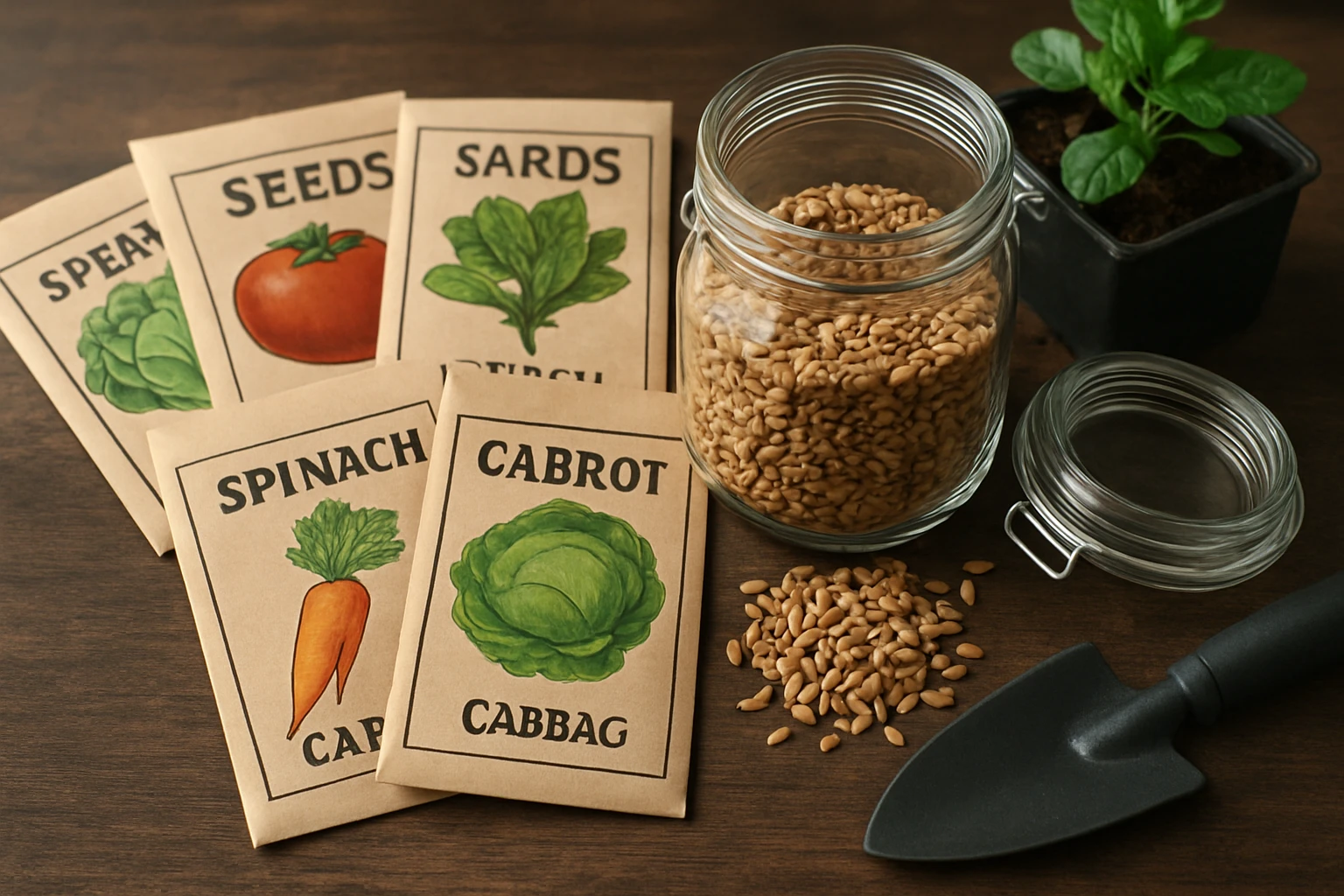
The Gardeners Basics Survival Seed Kit offers 35 vegetable varieties with over 16,000 seeds, all heirloom and non‑GMO. The kit includes lettuce, carrots, tomatoes, peppers, beans, and more, providing a comprehensive garden foundation. Each seed is packaged in a paper packet, reducing mold risk, and the kit supplies detailed planting instructions, making it ideal for indoor, hydroponic, or traditional soil setups.
The Black Duck Seed Pack delivers 43 assorted vegetable and herb varieties, exceeding 10,000 seeds, and includes a Mylar storage bag for long‑term preservation. This collection emphasizes high germination within 7‑14 days and features both common crops (tomatoes, peppers) and culinary herbs (dill, kale). Its affordable price and extensive variety make it an excellent supplement to any survival garden.
Comparison/Selection Guide
| Feature | Gardeners Basics Survival Seed Kit | Black Duck Seed Pack |
|---|---|---|
| Number of Varieties | 35 | 43 |
| Total Seeds | ~16,000 | ~10,000 |
| Non‑GMO/Heirloom | Yes | Yes |
| Included Storage | Water‑resistant packaging | Mylar bag |
| Price | $29.95 | $13.49 |
| Average Rating | 4.7/5 (8,903 reviews) | 4.5/5 (18,137 reviews) |
| Best For | Comprehensive starter kits, indoor/hydroponic growers | Budget‑conscious gardeners, herb enthusiasts |
When choosing between the two, consider budget, desired crop diversity, and storage preferences. The Gardeners Basics kit provides a larger seed count per variety, which is advantageous for bulk planting and seed saving. Conversely, the Black Duck pack offers a broader herb selection and a dedicated Mylar bag, which excels in long‑term preservation.
Best Practices & Tips
- Start seeds in a controlled environment using seed trays or biodegradable pots to improve germination monitoring.
- Label each tray with planting date, variety, and expected harvest window to streamline garden management.
- Implement a rotating planting schedule: sow fast‑growing greens every two weeks to maintain a continuous supply of fresh leaves.
- Utilize composted organic matter to enrich soil fertility, which boosts yield and reduces the need for synthetic fertilizers.
- Preserve excess harvest by fermenting, drying, or canning, extending food availability beyond the growing season.
Frequently Asked Questions
- What is the ideal storage temperature for emergency seeds?
- Seeds retain maximum viability when stored at 40‑50°F (4‑10°C) in a dark, dry environment. A refrigerator with a sealed Mylar bag works well.
- How long can heirloom seeds remain viable?
- Most heirloom seeds stay viable for 5‑10 years, with some varieties such as beans and peas lasting up to 15 years under optimal conditions.
- Can I grow these seeds hydroponically?
- Yes. The Gardeners Basics kit explicitly mentions suitability for hydroponic systems, and many of the Black Duck varieties perform well in nutrient‑film technique (NFT) setups.
- Do I need to treat the seeds before planting?
- For most non‑GMO heirloom seeds, a brief soak in water for 12‑24 hours improves germination. Avoid chemical seed treatments unless dealing with disease‑prone soils.
- How much space is required for a 35‑variety garden?
- A 4 × 8‑foot raised bed provides sufficient room for the core vegetables in the Gardeners Basics kit, while the Black Duck pack can be accommodated in a similar footprint with strategic interplanting.
Conclusion
Creating a resilient survival garden hinges on selecting high‑quality, non‑GMO seeds that germinate reliably and yield abundantly. By understanding seed viability, storage methods, and crop rotation, one can ensure a steady supply of fresh vegetables throughout the year. The Gardeners Basics Survival Seed Kit and Black Duck Seed Pack each fulfill distinct needs, offering flexibility for various budgets and planting preferences. Implementing the best‑practice tips outlined above will maximize harvests and enhance long‑term food security.
Products Featured in This Guide
Gardeners Basics Survival Seed Kit
Price: $29.95 | Rating: 4.7/5 (8,903 reviews)
Featured for its extensive 35‑variety, 16,000‑seed assortment, non‑GMO heirloom quality, and suitability for indoor, soil, and hydroponic growing.
Black Duck Seed Pack
Price: $13.49 | Rating: 4.5/5 (18,137 reviews)
Featured for its 43‑variety, 10,000‑seed collection, high germination rate, and inclusion of a Mylar storage bag for long‑term seed preservation.