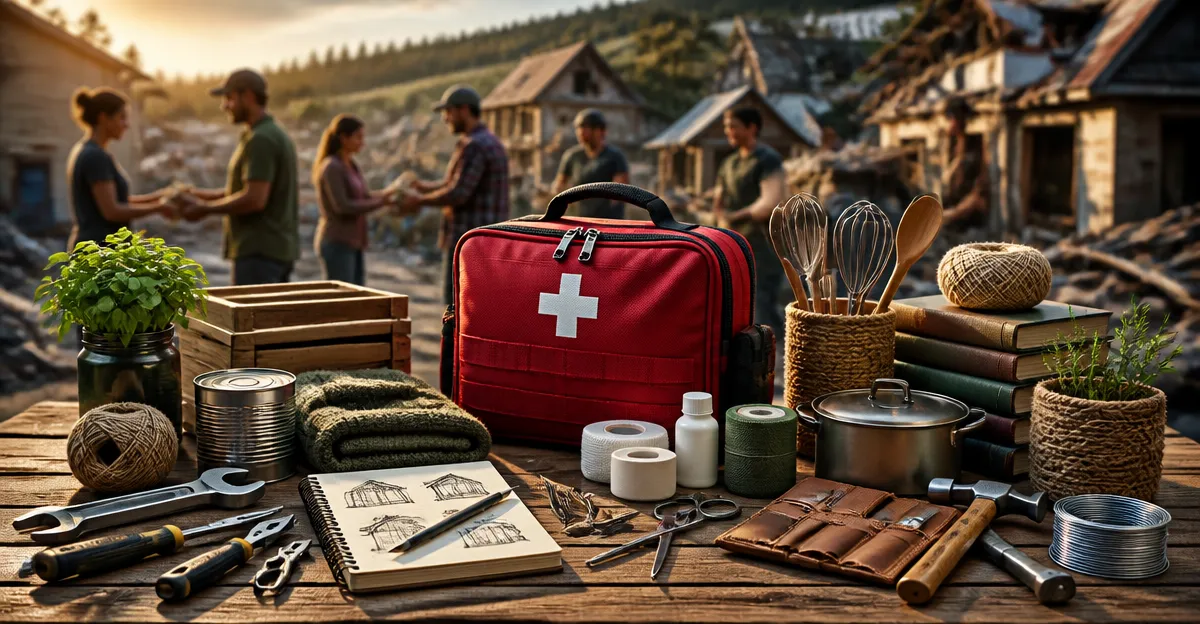
15 High-Value Skills to Barter After a Disaster: What Trades Will Get You Food, Water & Shelter
Introduction
When a disaster disrupts supply chains, the ability to exchange practical skills for essential resources becomes a lifeline. Communities that can trade knowledge for food, water, and shelter often recover more quickly than those that rely solely on external aid. Understanding which abilities hold the greatest value enables individuals to prepare proactively and to contribute meaningfully during crises.
Barter transactions are most effective when each party offers something tangible, reliable, and immediately useful. A well‑stocked emergency kit, for example, transforms a simple skill into a credible bargaining chip, because it demonstrates preparedness and provides instant assistance. The following list outlines fifteen high‑value skills that can be leveraged for survival, while naturally integrating a versatile first‑aid solution that enhances every trade.
Each entry explains why the skill matters, highlights real‑world applications, and references a product that can support the skill in practice. Readers will gain both strategic insight and concrete tools to increase their resilience in the aftermath of a disaster.
1. Basic First‑Aid Treatment
Providing immediate wound care, splinting, and burn management saves lives and prevents infections, making it one of the most sought‑after abilities. When injuries occur, communities prioritize individuals who can stabilize patients before professional help arrives. The VRIEXSD 400‑Piece First Aid Kit supplies adhesive bandages, tourniquets, an emergency blanket, and a comprehensive guide, ensuring that a practitioner has the tools needed for effective treatment.
At a price of $35.99, the kit offers a cost‑effective way to demonstrate competence, turning medical knowledge into a valuable trade asset. Its waterproof 1680D polyester fabric protects supplies from rain, allowing responders to work in adverse conditions. By pairing first‑aid expertise with this kit, a survivor can negotiate for food rations, clean water, or shelter space.
2. Fire‑Starting and Cooking
Ability to ignite and maintain a fire provides warmth, a method for cooking, and a means to purify water, making it indispensable in survival scenarios. Communities often exchange fire‑making skills for edible provisions or shelter materials. Demonstrating fire‑starting proficiency while carrying the VRIEXSD kit reinforces credibility, as the kit includes an emergency blanket that can be used to retain heat.
The compact dimensions of the kit (9.4×3.9×6.8 inches) allow it to be attached to a backpack, ensuring that essential medical supplies are always within reach during fire‑related activities. This combination of skills and equipment can secure high‑value barter items such as dried meats or fuel.
3. Water Purification
Access to safe drinking water is a universal priority after a disaster, and knowledge of filtration, boiling, and chemical treatment is highly prized. Individuals who can transform contaminated sources into potable water often receive food supplies or shelter in exchange. The VRIEXSD kit’s waterproof compartments protect purification tablets and cloth filters from moisture, preserving their effectiveness.
By offering water purification services while showcasing a reliable first‑aid kit, a trader can command premium barter rates, such as canned goods or fresh produce, because the community perceives both health and hydration needs as met.
4. Shelter Construction
Constructing temporary shelters from tarps, branches, or debris provides immediate protection from the elements, a skill that is always in demand. Builders who can erect sturdy lean‑tos or insulated bivouacs often receive building materials, blankets, or clothing in return. The VRIEXSD kit’s portable design (weighing only 2.64 pounds) enables shelter makers to carry medical supplies without sacrificing mobility.
When a shelter builder can also administer first‑aid treatment on site, the combined offering becomes a powerful barter package, encouraging exchanges for high‑calorie food packs or fuel.
5. Food Preservation
Techniques such as smoking, drying, and fermenting extend the shelf life of perishable foods, making them valuable commodities in a disrupted supply chain. Individuals skilled in preservation can trade cured meats, dried fruits, or fermented vegetables for water, medicine, or tools. The first‑aid kit’s emergency blanket can be repurposed as an insulating layer during low‑temperature drying processes.
By integrating the VRIEXSD kit, preservers demonstrate a commitment to health and safety, increasing the perceived value of their preserved goods during negotiations.
6. Basic Mechanics and Repair
Repairing bicycles, generators, or simple tools restores mobility and power, which are critical for gathering resources. Mechanics who can fix a broken bike chain or restore a generator often receive fuel, spare parts, or food in exchange. Carrying a comprehensive first‑aid kit while performing repairs signals preparedness, reassuring trade partners that safety concerns are addressed.
The kit’s divided compartments keep medical supplies organized, allowing a mechanic to quickly access bandages if a minor injury occurs during a repair, thereby reinforcing trust and facilitating smoother barter interactions.
7. Gardening and Seed Saving
Knowledge of planting cycles, soil enrichment, and seed preservation ensures a sustainable food source, a skill highly valued when commercial agriculture is disrupted. Gardeners can trade fresh vegetables, seedlings, or knowledge for water, tools, or shelter materials. The VRIEXSD kit includes a first‑aid guide that can be used to treat minor gardening injuries such as cuts or splinters.
Having immediate medical support on hand encourages community members to accept larger quantities of produce, knowing that any accidental injuries can be promptly addressed.
8. Animal Husbandry
Raising and caring for livestock provides protein, milk, and labor, making animal husbandry a cornerstone of post‑disaster resilience. Those who can tend to goats, chickens, or rabbits often barter animal products for grains, tools, or medical supplies. The VRIEXSD kit’s waterproof fabric protects supplies from animal waste and moisture, extending their usability in farm environments.
When a caretaker can also administer first‑aid to injured animals or humans, the combined skill set becomes an attractive barter proposition, yielding higher‑value exchanges such as meat cuts or dairy products.
9. Navigation and Orienteering
Proficiency with maps, compasses, and natural landmarks enables individuals to locate resources, safe zones, and evacuation routes, a capability that communities highly prize. Navigators can exchange route information for food caches, water sources, or shelter locations. The VRIEXSD kit’s compact size allows it to be attached to a belt or backpack, ensuring that medical supplies are always within reach during long treks.
Having immediate access to first‑aid tools while traversing rugged terrain reduces risk, making the navigator’s service more desirable and increasing the barter value of the information provided.
10. Communication (Radio, Signaling)
Operating radios, creating signal fires, or using visual codes facilitates coordination among dispersed survivors, a skill that can be exchanged for essential goods. Communicators who can relay information about supply drops or safe havens often receive food parcels, water, or medical kits. The VRIEXSD first‑aid kit’s emergency blanket can double as a reflective signaling surface, enhancing visibility during night operations.
By coupling communication expertise with a ready‑to‑use medical kit, a trader can negotiate for larger shipments of canned goods or fuel, as the community perceives both safety and connectivity to be secured.
11. Waste Management and Sanitation
Effective disposal of human waste and contaminated water prevents disease outbreaks, a critical need in crowded shelters. Sanitation specialists who can construct latrines or treat wastewater often barter for clean water, food, or bedding. The VRIEXSD kit’s waterproof compartments protect sanitation tools from moisture, ensuring they remain functional.
When sanitation experts also carry a comprehensive first‑aid kit, they can address injuries that occur during latrine construction, thereby increasing their overall barter leverage.
12. Clothing Repair and Tailoring
Repairing torn garments, stitching patches, and creating warm clothing from salvaged materials sustains body temperature and morale. Tailors can exchange repaired clothing for food, water, or shelter upgrades. The first‑aid kit’s lightweight design allows tailors to carry it without hindering movement, providing immediate care for needle‑related injuries.
By offering both garment repair and first‑aid services, a tailor becomes a multifaceted asset, encouraging barter partners to provide higher‑value items such as insulated blankets or dry rations.
13. Mental Health Support
Providing emotional support, stress‑relief techniques, and conflict mediation helps maintain community cohesion during prolonged crises. Mental‑health facilitators often receive food, water, or safe sleeping areas in exchange for their services. The VRIEXSD kit’s emergency blanket can be used as a comforting wrap during anxiety‑inducing moments, adding a tactile element to psychological care.
When a facilitator can also address minor physical injuries, their overall contribution is amplified, making barter negotiations more favorable for both parties.
14. Energy Generation (Solar, Hand‑Crank)
Generating electricity through solar panels or hand‑crank devices powers lights, radios, and small appliances, a highly valued capability when the grid is down. Energy technicians can trade generated power for food, water, or medical supplies. The VRIEXSD kit’s waterproof material safeguards batteries and electronic components from rain, extending their operational lifespan.
By coupling energy generation with immediate medical assistance, a technician can command premium barter rates, such as bulk grain or fresh produce, because the community perceives both power and health needs as satisfied.
15. Leadership and Organization
Effective coordination, decision‑making, and resource allocation keep groups focused and efficient, a skill that often determines survival outcomes. Leaders who can organize work parties, allocate supplies, and resolve disputes frequently receive priority access to food, water, and shelter. Carrying the VRIEXSD 400‑Piece First Aid Kit demonstrates a leader’s commitment to the well‑being of their group.
The kit’s comprehensive inventory, including tourniquets and emergency blankets, ensures that a leader can address emergencies swiftly, reinforcing trust and enhancing their bargaining power for essential resources.
Conclusion
Bartering after a disaster hinges on offering skills that directly address basic human needs while demonstrating reliability through tangible resources. The fifteen abilities outlined above provide a roadmap for individuals seeking to maximize their trade value in challenging environments. Integrating a dependable first‑aid solution such as the VRIEXSD 400‑Piece First Aid Kit reinforces credibility, turning expertise into a marketable asset.
By preparing both knowledge and equipment ahead of time, survivors can navigate post‑disaster economies with confidence, securing food, water, and shelter for themselves and their communities.
Frequently Asked Questions
What are the most valuable skills to barter for food, water, and shelter after a disaster?
Key skills include fire‑starting, water purification, basic medical care, shelter construction, and food preservation, as they directly provide essential resources.
How can first‑aid knowledge enhance barter transactions in a crisis?
First‑aid expertise adds immediate value, making you a trusted trade partner for medical supplies and emergency assistance.
Why is a well‑stocked emergency kit important when bartering skills?
It proves preparedness and offers tangible resources, turning your skill into a credible bargaining chip.
Can learning basic carpentry help secure shelter after a disaster?
Yes, basic carpentry enables quick repairs or building of temporary shelters, which are highly sought after in emergency situations.
What simple water‑purification methods are most effective for barter?
Boiling, portable filters, and chemical tablets are easy to teach and provide safe drinking water, making them valuable trade assets.