How to Safely Store and Recycle Batteries in Emergency Kits: A Complete Guide to Prevent Fires and Maximize Shelf Life
Introduction
In an emergency, reliable power sources can mean the difference between comfort and crisis. Batteries are the most portable power units, yet improper storage can lead to leakage, corrosion, or even fire. This guide explains how to organize, protect, and recycle batteries so that they remain safe and functional when you need them most. By following these steps, one will extend battery life, reduce waste, and keep emergency kits compliant with safety regulations.
What You’ll Need
- Ontel Battery Daddy (Red) – double‑sided organizer with tester, $18.99
- Ontel Battery Daddy (White) – larger capacity version, $24.99, 4.8/5 rating
- ALCYON Battery Organizer – foam‑slot holder for 54 batteries, $13.99, 4.7/5 rating
- Non‑metallic fire‑resistant container (e.g., a metal‑free plastic box)
- Label maker or waterproof marker
- Protective gloves and safety glasses
- Local recycling drop‑off information or a certified battery recycling service
Step 1: Assess Your Battery Inventory
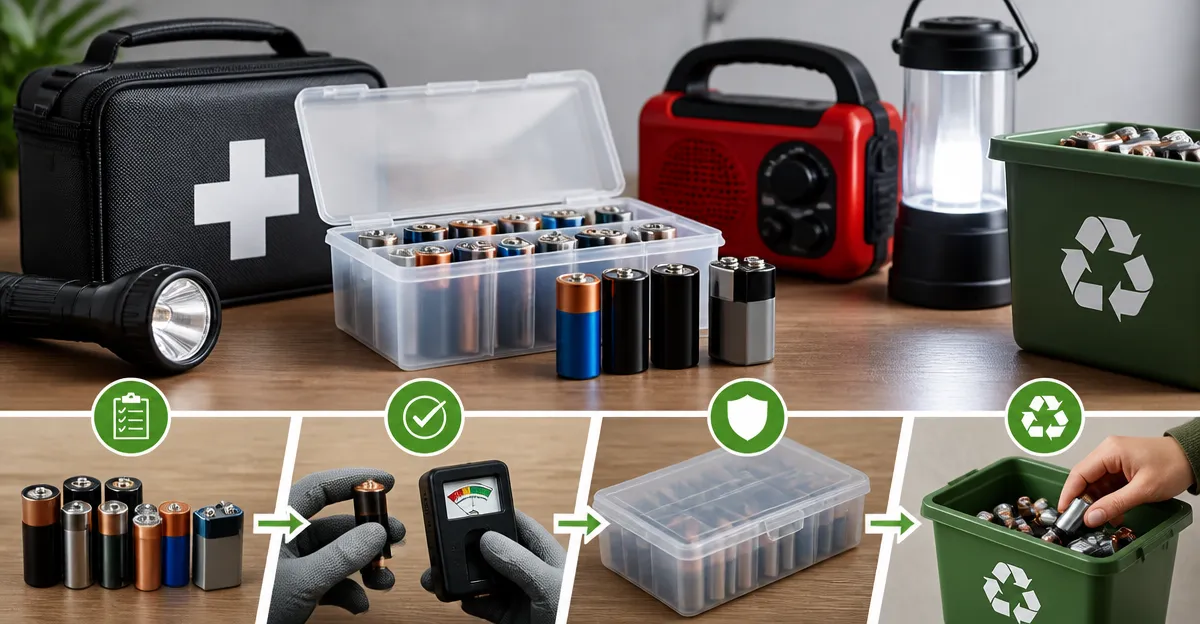
The first task is to catalogue every battery that will be part of the emergency kit. Separate batteries by chemistry type – alkaline, lithium, NiMH, or rechargeable – because mixing chemistries can accelerate self‑discharge and increase the risk of leakage. Write the type, size, and purchase date on a label and attach it to the storage container. This inventory will help you rotate stock before expiration and will simplify recycling later.
Step 2: Choose the Right Storage Solution
For most households, a dedicated battery organizer provides the best balance of protection and visibility. The Ontel Battery Daddy (Red) stores up to 180 batteries on two clear sides, allowing quick visual identification while the heavy‑duty latches prevent accidental opening. Its built‑in tester lets one verify charge without removing batteries, which reduces handling and potential short circuits. At $18.99, it is an economical choice for families that need a portable solution.
For larger kits or professional settings, the Ontel Battery Daddy (White) offers the same double‑sided design but includes a reinforced handle and a slightly higher price of $24.99. With a 4.8‑star rating from over 83,000 reviewers, users praise its durability during field work. Choose the white version when the kit will be moved frequently, such as in a vehicle or a mobile command center.
If space is limited or if you prefer a foam‑slot system, the ALCYON Battery Organizer holds 54 batteries in pre‑cut foam compartments. Its clear lid and lockable design keep batteries from rattling, and the foam prevents physical damage. Priced at $13.99, it is ideal for small emergency bags where weight matters.
Step 3: Prepare the Storage Environment
Store batteries in a cool, dry place away from direct sunlight, heat sources, and metal objects. A fire‑resistant plastic container adds an extra layer of protection; it prevents a single leaking battery from igniting surrounding materials. Place the chosen organizer inside this container and seal it tightly. Ensure the container is labeled “Batteries – Do Not Open Until Needed” to alert anyone handling the kit.
Step 4: Use the Built‑In Tester to Verify Charge
Before sealing the kit, test each battery with the organizer’s built‑in tester. Insert the battery according to polarity markings; the indicator will show green for good charge, amber for moderate, and red for depleted. Discard any battery that reads red, as it is more likely to leak or fail during an emergency. This proactive step maximizes shelf life and reduces the chance of a dead device when power is critical.
Step 5: Organize by Frequency of Use
Place the most frequently needed batteries (e.g., AA and AAA for flashlights) in the top compartments of the organizer for rapid access. Reserve larger or less‑used sizes (such as D or 9‑Volt) for lower trays. This arrangement mirrors a “first‑in‑first‑out” system, ensuring older batteries are used before newer ones. Mark each compartment with its intended device using a waterproof marker.
Step 6: Incorporate a Battery Recycling Plan
When batteries reach the end of their useful life, they must be recycled rather than thrown in the trash. Keep a small, sealable bag inside the emergency kit for spent batteries. Once the bag is full, transfer its contents to a local recycling drop‑off point or schedule a pickup with a certified service. Many municipalities offer free battery recycling days; check the local government website for details.
For added safety, wear protective gloves and glasses when handling batteries that show signs of corrosion or leakage. Place any compromised battery in a separate, non‑metallic container and label it as “Hazardous – Do Not Dispose in Regular Trash.” This practice prevents accidental chemical exposure.
Step 7: Perform Routine Maintenance
Every six months, open the emergency kit and repeat the testing process outlined in Step 4. Rotate batteries by moving the oldest stocked items to the front of the organizer and replacing them with fresh stock. Record the date of each rotation on the inventory label. Regular maintenance ensures that the kit remains ready for use and that no battery exceeds its recommended storage period (typically 5‑10 years for alkaline, shorter for lithium).
Tips & Pro Tips
- Separate Chemistries: Never store lithium‑ion batteries with alkaline types; they have different self‑discharge rates and safety profiles.
- Temperature Monitoring: Use a small temperature‑log device inside the container; keep the environment below 25 °C (77 °F) for optimal longevity.
- Label Clearly: Include both the battery size and the device it powers on the label; this reduces confusion during high‑stress situations.
- Use the Tester Regularly: The built‑in tester in the Ontel organizers eliminates the need for a separate multimeter, saving space and cost.
- Backup Power: Consider adding a small solar charger to your kit; it can recharge rechargeable batteries, extending the kit’s usefulness.
Troubleshooting
Problem: The organizer lid will not lock securely.
Solution: Ensure the latch pins are aligned; clean any debris from the latch mechanism and re‑engage. If the problem persists, contact the manufacturer for a replacement part.
Problem: Battery tester shows inconsistent readings.
Solution: Verify that the battery contacts are clean; use a dry cloth to remove any oxidation. If the issue continues, the tester’s internal battery may need replacement.
Conclusion
Proper battery storage and recycling are essential components of a safe, reliable emergency kit. By assessing inventory, selecting an appropriate organizer such as the Ontel Battery Daddy (Red), testing charge, and establishing a recycling routine, one can prevent fires, extend shelf life, and reduce environmental impact. Regular maintenance ensures that the kit remains ready for any situation, providing peace of mind when power is most needed.
Products Mentioned in This Guide
Frequently Asked Questions
What is the safest way to store batteries in an emergency kit?
Use a fire‑resistant, moisture‑proof container or a dedicated battery organizer with individual slots to keep terminals separated and protected.
How long can stored batteries retain their charge?
Most alkaline batteries keep usable power for 5‑10 years, while lithium cells can last 10‑15 years if kept cool and dry.
Why should I test batteries before adding them to my emergency kit?
Testing ensures you discard weak or leaking cells, preventing loss of power and potential corrosion or fire hazards.
What are the best practices for recycling used batteries from an emergency kit?
Place spent batteries in a labeled recycling bag and drop them off at a certified e‑waste facility or retailer recycling program.
Can I store batteries near heat sources or in direct sunlight?
No; heat accelerates self‑discharge and increases the risk of leakage or rupture, so store batteries in a cool, shaded location.